
原原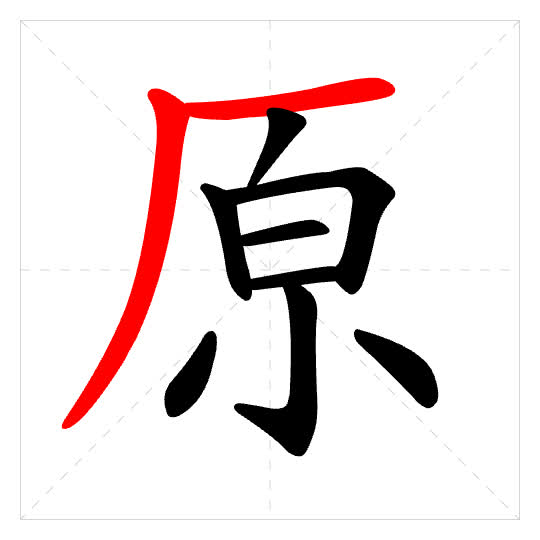
Basic Meaning
adj
Often used to describe the earliest or starting state of something.
original; initial; beginning
最初的,开始的。
Words:
原始
Sentences:
- 我们需要找到问题的原始原因。We need to find the initial cause of the problem.
- 这个故事的原始版本很有趣。The original version of this story is very interesting.
adv
Used as an adverb to indicate how something was in the past or its previous state.
originally; formerly; as before
属性词。原来;本来。
Words:
原单位原计划官复原职原班人马原封不动
Sentences:
- 我原计划今天去公园。I originally planned to go to the park today.
- 他原单位的工作很忙。His work at his former unit was very busy.
adj
Refers to materials in their natural or unrefined state, commonly used in industrial or agricultural contexts.
unprocessed; raw
没加工的。
Words:
原粮原煤原木原棉原油
Sentences:
- 这家工厂使用原煤发电。This factory uses raw coal to generate electricity.
- 原木可以用来做家具。Raw wood can be used to make furniture.
v
Often used in contexts involving understanding or pardoning someone's actions.
to forgive; to excuse
谅解,宽容。
Words:
情有可原原谅
Sentences:
- 请原谅我的错误。Please forgive my mistake.
- 情有可原,他不是故意的。It's excusable; he didn't do it on purpose.
n
Refers to broad, flat geographical features, often used in place names or descriptions.
plain; flatland; open area
宽广平坦的地方。
Words:
星火燎原草原高原平原原野
Sentences:
- 草原上的风景很美。The scenery on the grassland is very beautiful.
- 高原地区空气稀薄。The air is thin in plateau areas.
adj
Emphasizes that something remains in its initial or intended state without alteration.
original; unchanged; as it was
本来的;没有改变的。
Words:
原封不动原籍原价原意
Sentences:
- 这本书原封不动地放在书架上。This book is placed on the shelf exactly as it was, untouched.
- 我坚持我的原意。I stick to my original intention.
n
Refers to the inherent or fundamental form of something, often used in contexts of restoration or analysis.
original state; original appearance
本来的样子。
Words:
还原复原
Sentences:
- 我们需要还原这个场景。We need to restore this scene to its original state.
- 这幅画复原得很好。This painting has been restored very well.
n
Denotes the fundamental basis or starting point of something, often in abstract or philosophical contexts.
origin; source; root
事物的根本或开端。
Words:
原委本原
Sentences:
- 我们需要了解事情的原委。We need to understand the origin and details of the matter.
Writing & Component
Radical厂
Structuresemi_enclosed
Stroke Count10
Strokes一丿丿丨𠃍一一亅丿丶