
好好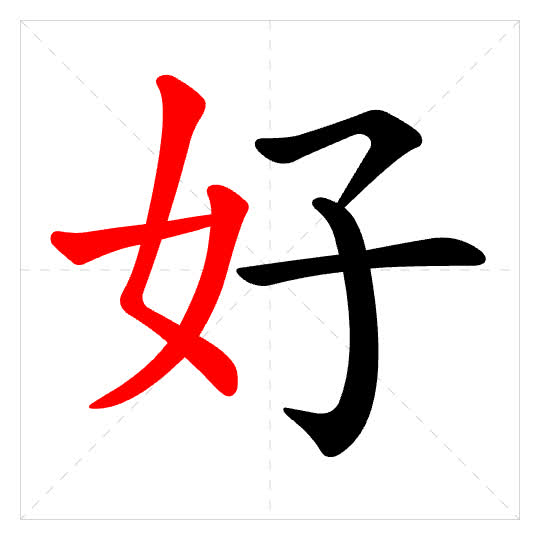
Basic Meaning
adj
A very common and general adjective for positive qualities. Can describe people, things, situations, etc.
good; nice; satisfactory (opposite of 'bad')
优点多的或使人满意的,跟“坏”相对。
Sentences:
- 他是一个好人,经常帮助别人。He is a good person who often helps others.
- 这部电影很好,我推荐你看。This movie is very good; I recommend you watch it.
adj
Indicates something is fitting or the right way to do something.
proper; appropriate; suitable
合宜;妥当。
Sentences:
- 你这样安排很好,大家都没意见。Your arrangement is very proper; everyone has no objections.
Forms compound adjectives like 好看 (hao3kan4, good-looking), 好听 (hao3ting1, pleasant to hear), 好吃 (hao3chi1, delicious).
used before a verb to indicate the satisfactory aspect of an action
用在动词前,表示使人满意的性质在哪方面。
Sentences:
- 这首歌真好听。This song is really pleasant to listen to.
- 她今天穿得特别好看。She is dressed particularly nicely today.
adj
Describes relationships between people.
friendly; harmonious; on good terms
友爱,和睦。
Words:
Synonyms:
Antonyms:
Sentences:
- 他们是好朋友,从小一起长大。They are good friends who grew up together since childhood.
- 两国关系非常友好。The relations between the two countries are very friendly.
adj
Commonly used in greetings like 你好吗? (ni3 hao3 ma?)
healthy; recovered (from illness)
健康;痊愈。
Words:
身体好体质好
Sentences:
- 爷爷的身体一直很好。Grandpa's health has always been good.
- 你的感冒好了吗?Have you recovered from your cold?
adj
Often used in phrases like 请慢走 (qing3 man4 zou3, please go slowly) to be polite, but 好 itself is part of set phrases like 好吃 (hao3chi1, delicious) when offered food.
used in polite expressions
用于客套话。
Sentences:
- 您好,久仰大名,今日有幸相见。Hello, I've long admired your name, and it's an honor to meet you today.
adj
Grammatical function similar to 完, but often implies preparation or readiness. E.g., 准备好 (zhun3bei4 hao3, prepared and ready).
used after a verb as a complement to indicate completion or achievement of a goal
用在动词后做补语,表示完成或目标实现。
Sentences:
- 作业我已经写好了。I have already finished writing my homework.
- 晚饭准备好了,可以吃了。Dinner is ready; we can eat now.
v
Often used as an interjection or discourse marker. E.g., 好吧 (hao3 ba, alright then).
to express approval, agreement, or a concluding tone
表示赞许、应允或结束等口气。
Words:
好吧
Sentences:
- 好吧,就按你说的做。Alright, let's do it as you say.
- 好,会议到此结束。Okay, the meeting ends here.
adj
Tone and context dependent. Can mean 'fine' in a negative sense, like 'Oh, great...'
used ironically to express dissatisfaction, disdain, or sarcasm
反语。表示不满、蔑视、讽刺等语气。
Synonyms:
讽
Antonyms:
赞
Sentences:
- 这下可好,车坏了,我们走不了了。Well, great. The car broke down, and we can't leave.
- 你干的好事!看看你把房间弄得多乱。Look what you've done! See how messy you've made the room.
v
Used before a verb to indicate that something is easy to do or facilitates an action.
easy; convenient to
容易;便于。
Words:
好方便
Sentences:
- 这种工具很好用。This kind of tool is very easy to use.
- 这里交通好方便。The transportation here is very convenient.
adv
An intensifier. E.g., 好多 (hao3 duo1, quite a lot), 好久 (hao3 jiu3, a very long time).
used to modify numerals like '一', '几', or words like '多', '久' to emphasize a large quantity or long duration
修饰数量词“一、几”,时间词或形容词“多、久”,强调数量多或时间长。
Sentences:
- 我等你等了好半天。I waited for you for a really long time.
- 他买了好多水果。He bought a lot of fruit.
adv
Similar to 'so' or 'very' in exclamations. E.g., 好漂亮! (hao3 piao4liang, so beautiful!)
used before a verb or adjective to indicate a high degree, often with an exclamatory tone
用在动词或形容词前,表示程度深,多含感叹意味。
Words:
好深好冷好香好漂亮好面熟
Sentences:
- 今天的天气好热啊!The weather is so hot today!
- 这孩子好聪明!This child is so smart!
Writing & Component
Radical女
Structureleft_right
Stroke Count6
Strokes𡿨丿㇀㇇亅一