
多多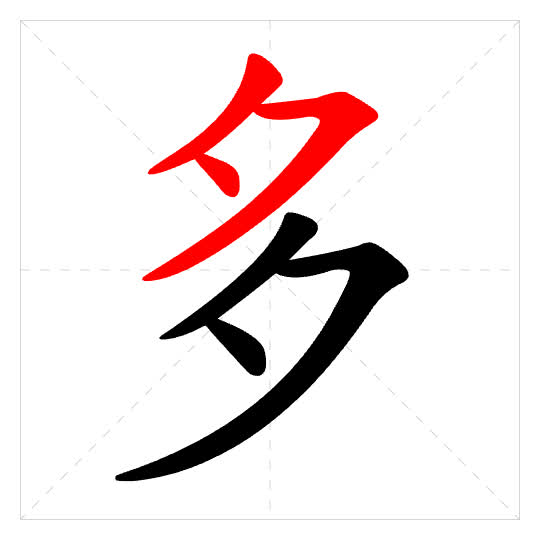
Basic Meaning
adj
Used to describe a large quantity, opposite of 少.
many; much; numerous
数量大(跟“少、寡”相对)。
Words:
多年多才多艺多种多样多快好省
Synonyms:
Antonyms:
寡少
Sentences:
- 他有很多朋友。He has many friends.
- 这个城市有多种多样的美食。This city has a variety of delicious foods.
v
Indicates an increase beyond the original or expected amount.
to exceed; to be more than
超出原有或应有的数目;比原来的数目有所增加(跟“少”相对)。
Words:
多一半多余
Antonyms:
Sentences:
- 这些钱多余了,我们不需要。This money is extra; we don't need it.
- 他多拿了一个苹果。He took one more apple than he should have.
adj
Used to describe behaviors or phenomena that go beyond normal limits, often in compounds like 多心.
excessive; over-
表示某种行为或某种自然现象超出应有的或原有的限度或数量。
Words:
多心多事多嘴多虑多疑
Sentences:
- 她总是多心,担心太多事情。She is always overthinking and worrying too much.
- 不要多嘴,听别人说完。Don't talk too much; let others finish speaking.
m
Placed after a number or measure word to indicate an approximate amount with a remainder.
more than; -odd
(用在数词或数量词后)表示有零头。
Words:
五十多岁两丈多高三年多一米多长二十多幅画
Sentences:
- 他五十多岁了。He is over fifty years old.
- 这棵树两丈多高。This tree is over two zhang tall.
adj
Used as a complement to adjectives to indicate a large degree of difference.
much; far
充当做谓语的形容词的补语,表示相差的程度大。
Sentences:
- 他比我高得多。He is much taller than me.
- 今天比昨天热得多。Today is much hotter than yesterday.
adv
Used in interrogative sentences to ask about degree or quantity.
how; to what extent
用在疑问句里,询问程度、数量。
Words:
Sentences:
- 你多大了?How old are you?
- 这里有多少人?How many people are here?
adv
Used in reduplicated form 多多 to emphasize maximum degree within a range.
as much as possible; to the greatest extent
连用“多”,表示强调一定范围中的最大程度。
Sentences:
- 请多多帮助我。Please help me as much as possible.
- 我们要多多学习。We need to study to the greatest extent.
adv
Used with 无论 and 都 to indicate any degree.
no matter how; however
跟连词“无论”、副词“都”配合,表示任何一种程度。
Sentences:
- 无论多难,他都要完成。No matter how difficult it is, he will complete it.
- 无论多晚,我都会等你。No matter how late it is, I will wait for you.
adv
Used in exclamatory sentences to express a high degree.
how; so; very
用在感叹句里,表示程度很高。
Words:
Sentences:
- 多么美丽的风景啊!How beautiful the scenery is!
- 她多么聪明!How smart she is!
adv
Indicates a majority or general tendency.
mostly; largely
大多;大都。
Words:
大多大多数
Sentences:
- 这里的人大多很友好。Most people here are very friendly.
- 大多数学生都喜欢这个老师。The majority of students like this teacher.
Writing & Component
Radical夕
Structuretop_bottom
Stroke Count6
Strokes丿㇇丶丿㇇丶