
内内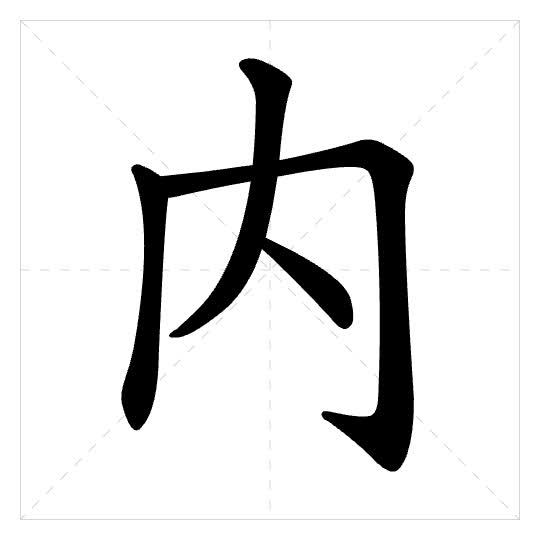
Basic Meaning
n
A location noun. Often used to form compound words indicating location or scope, such as 国内 (domestic), 室内 (indoor).
Inside; interior (the opposite of 'outside').
方位词。里边(跟“外”相对)。
Words:
内定内情内衣国内室内
Synonyms:
Sentences:
- 请在房间内等我。Please wait for me inside the room.
- 国内旅游现在很受欢迎。Domestic tourism is very popular now.
n
Used in traditional or formal contexts to refer to family relations. For example, 内人 (my wife, humble), 内弟 (wife's younger brother).
Wife or the relatives of one's wife.
妻子或妻子一方的亲属。
Words:
内弟内人内助惧内内侄
Sentences:
- 他向大家介绍:“这是内人。He introduced to everyone: "This is my wife."
- 我内弟下个月要来北京工作。My wife's younger brother is coming to work in Beijing next month.
n
Often appears in medical or emotional contexts, e.g., 内心 (innermost heart), 内脏 (internal organs), 内伤 (internal injury).
Refers to the inner heart/feelings or internal organs.
指内心或内脏。
Words:
内伤五内俱焚内心内脏
Sentences:
- 她外表冷静,但内心很紧张。She looks calm on the outside, but she is very nervous inside.
- 医生说他受了内伤,需要休息。The doctor said he had an internal injury and needed rest.
n
An archaic term, primarily used in historical contexts. The most common word is 大内.
Refers to the imperial palace; within the palace.
指皇宫,宫内。
Words:
大内
Sentences:
- 在古代,大内是皇帝居住的地方。In ancient times, the 'Danei' (Great Within) was where the emperor lived.
Writing & Component
Radical冂
Structuresingle
Stroke Count4
Strokes丨𠃌丿丶