
错错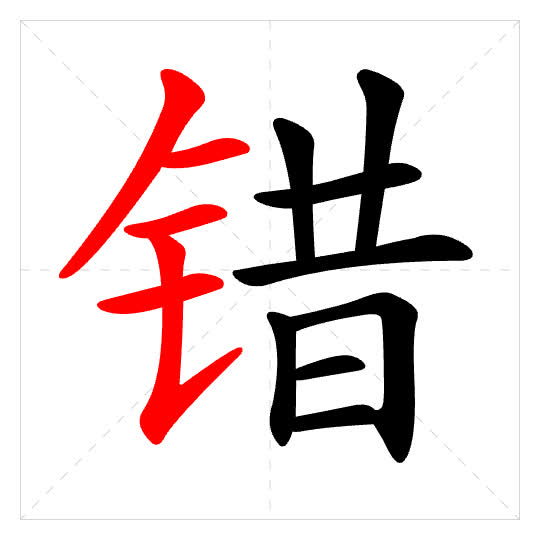
Basic Meaning
adj
形容事物交错、混杂的状态。常构成复合词如“错落”、“错综复杂”,多用于描述景观、结构或关系,书面色彩较浓。
interlocking; intermingled; intricate
参差;错杂。
Words:
错落错杂觥筹交错错综复杂犬牙交错
Sentences:
- 山上的石头错落有致,形成独特的风景。The rocks on the mountain are arranged in an interlocking and well-proportioned manner, forming a unique landscape.
- 这两件事的关系错综复杂,很难说清。The relationship between these two matters is intricate and complex, hard to explain clearly.
v
指在相对运动中有意或无意地避开。当用于“错过”时,常指失去机会、时间或人。
to pass by without colliding; to miss
相对行动时避开而不碰上。
Words:
错车错开错过机会
Sentences:
- 山路很窄,两辆车需要小心地错车。The mountain road is very narrow; two cars need to carefully pass each other.
- 我因为堵车错过了电影的开头。I missed the beginning of the movie because of the traffic jam.
v
特指安排时间使不同的人或事不冲突,是“错开”在日程安排上的具体应用。
to stagger; to arrange at different times
使办事的时间不冲突。
Sentences:
- 我们可以把会议时间错一下,这样大家都能参加。We can stagger the meeting times so that everyone can attend.
adj
最常用的含义,与“对”相对。可修饰具体事物(错字)或抽象判断(错误)。
wrong; incorrect
不正确(跟“对”相对)。
Words:
错误错怪错字错案错觉
Synonyms:
Antonyms:
Sentences:
- 这个问题的答案是错的,你再想想。The answer to this question is wrong. Think about it again.
- 他发现自己写了一个错字。He found that he had written a wrong character.
n
用作名词,指具体的过失或错误的地方。常用于“有错”、“出错儿”等表达。
fault; mistake; error
过错;错处。
Words:
没错儿出错儿大错过错
Synonyms:
Sentences:
- 这件事是我的错,我应该道歉。This matter is my fault; I should apologize.
- 工作中偶尔出点儿错是难免的It's inevitable to make occasional mistakes at work.
adj
只用于否定式或反问式,如“不错”表示“挺好”,“错不了”表示“肯定好/对”。此时“错”不直接翻译为“bad”,而是整个短语表达正面含义。
bad; poor (used in negative constructions)
坏;差(用于否定式)。
Words:
不错错不了
Sentences:
- 这件衣服你穿上真不错!This outfit looks really good on you!
- 放心吧,他的能力错不了。Don't worry, his ability is definitely solid (lit. cannot be bad).
Writing & Component
Radical钅
Structureleft_right
Stroke Count13
Strokes丿一一一𠄌一丨丨一丨𠃍一一