
趣趣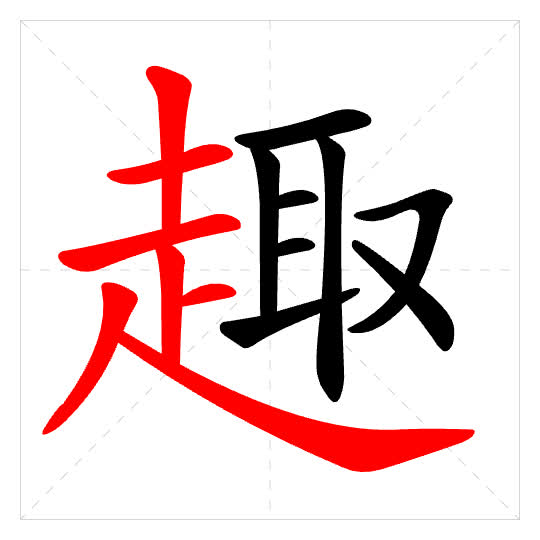
Basic Meaning
n
Often used in formal or literary contexts, e.g., in words like 旨趣 or 志趣.
inclination; intention
意向。
Words:
旨趣志趣异趣
Sentences:
- 他们的志趣相投,所以成了好朋友。Their inclinations align, so they became good friends.
- 这本书的旨趣是探讨人生意义。The intention of this book is to explore the meaning of life.
n
Commonly used in everyday speech, often with 儿 (qu4r) in informal settings, e.g., 有趣 or 没趣.
interest; fun
(~儿)趣味;兴味。
Words:
有趣没趣
Sentences:
- 这个故事真有趣儿,我听了很开心This story is really fun; I felt happy listening to it.
- 他觉得没趣,就提前离开了聚会。He felt uninteresting, so he left the party early.
n
Used as an adjective in compounds like 趣事 or 趣闻 to describe things that are fun or entertaining.
interesting; amusing
有趣味的。
Words:
趣事趣闻
Sentences:
- 他分享了很多趣事,逗得大家哈哈大笑。He shared many interesting stories, making everyone laugh heartily.
- 新闻里有一些趣闻,让人读起来很轻松。There are some amusing anecdotes in the news, making it easy and relaxing to read.
Writing & Component
Radical走
Structuresemi_enclosed
Stroke Count15
Strokes一丨一丨一丿㇏一丨丨一一㇀㇇丶