
越越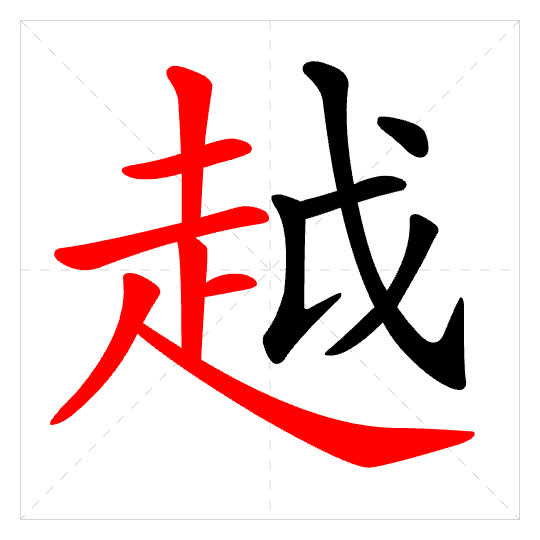
Basic Meaning
v
Often used with physical barriers like walls or boundaries.
to cross over (an obstacle); to jump over
跨过(阻碍);跳过。
Words:
越墙越界跨越翻山越岭越狱
Synonyms:
Sentences:
- 他轻松地越过了那道墙。He easily crossed over that wall.
- 运动员在比赛中成功越界。The athlete successfully crossed the boundary during the competition.
adj
Describes high-pitched or intense qualities, typically in literary or formal contexts.
(of sound, emotion, etc.) soaring; uplifted
(声音、情感等)昂扬。
Words:
激越清越声音清越群情激越
Synonyms:
昂扬
Sentences:
- 她的歌声清越动听。Her singing voice is clear and soaring, very pleasant to hear.
- 观众的情绪越来越激越。The audience's emotions are becoming increasingly uplifted.
v
Archaic usage, found in classical texts or idioms like 杀人越货.
(literary) to rob; to plunder
〈书〉抢夺。
Words:
杀人越货越货
Synonyms:
抢夺劫
Sentences:
- 在古代故事中,强盗常杀人越货。In ancient stories, bandits often killed people and robbed goods.
adv
Grammatical pattern for comparative intensification, e.g., 越说越高兴.
used in the pattern '越...越...' to indicate increasing degree with condition or time
重复使用,构成“越……越……”的格式,表示程度随条件的变化或时间的推移而加深。
Words:
越发
Sentences:
- 他越跑越快。He runs faster and faster.
- 天气越冷,她越想家。The colder the weather gets, the more she misses home.
v
Often refers to enduring or traversing periods or spaces, e.g., seasons or areas.
to pass through; to go through
经过。
Words:
越冬穿越越冬作物
Synonyms:
Sentences:
- 这些植物可以安全越冬。These plants can safely pass through the winter.
- 他们计划穿越沙漠。They plan to go through the desert.
Writing & Component
Radical走
Structuresemi_enclosed
Stroke Count12
Strokes一丨一丨一丿㇏一𠄌㇂丿丶