
讨讨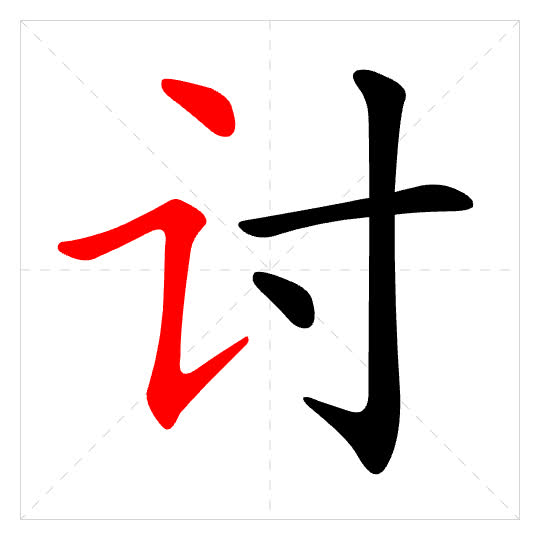
Basic Meaning
v
This sense is now primarily used in historical or formal contexts related to military action, such as in 讨伐 (tao3 fa2) or 征讨 (zheng1 tao3). It is less common in daily conversation.
to send troops to attack; to launch a punitive expedition against; to suppress by force.
征伐;发兵攻打。
Words:
讨治讨伐讨平征讨
Sentences:
- 古代帝王常派兵讨伐叛乱者。Ancient emperors often sent troops to suppress rebels.
v
This sense is the core meaning in words like 讨论 (discuss) and 探讨 (explore). It implies a thorough or formal process of inquiry.
to study; to investigate; to discuss.
研究,推求。
Words:
Sentences:
- 这个问题我们需要开会讨论一下。We need to have a meeting to discuss this issue.
- 科学家们正在探讨环境污染的解决方案。Scientists are investigating solutions to environmental pollution.
v
This sense often refers to requesting something, sometimes persistently or from someone in authority. It can have a neutral (讨教) or slightly negative connotation (讨债, 讨便宜).
to ask for; to demand; to beg.
请求;索取。
Words:
讨饭讨债讨教讨价讨好讨便宜
Synonyms:
乞要
Sentences:
- 他今天来公司是向老板讨要工资的。He came to the company today to demand his salary from the boss.
- 我想向您讨教一个问题。I'd like to ask you for advice on a question.
v
This usage is informal and somewhat traditional, primarily found in the fixed phrase 讨老婆. The more neutral modern term for 'to marry' is 结婚.
(colloquial) to take (a wife); to marry (a woman).
娶。
Words:
讨老婆
Synonyms:
娶
Sentences:
- 爷爷说他年轻时很穷,好不容易才讨到老婆。Grandpa said he was very poor when he was young, and it was not easy for him to find a wife.
v
This sense is often used in fixed phrases describing the act of bringing something (usually a feeling or reaction) upon oneself, such as 讨厌 (to dislike / to be annoying) or 讨人喜欢 (to be likable).
to cause; to incur; to provoke (a reaction).
招惹。
Words:
讨厌自讨没趣讨嫌讨人喜欢
Sentences:
- 你这样大声说话,会讨人厌的。If you talk so loudly, you'll make people dislike you.
- 这个小狗很可爱,特别讨人喜欢。This puppy is very cute and particularly likable.
Writing & Component
Radical讠
Structureleft_right
Stroke Count5
Strokes丶㇊一亅丶