
被被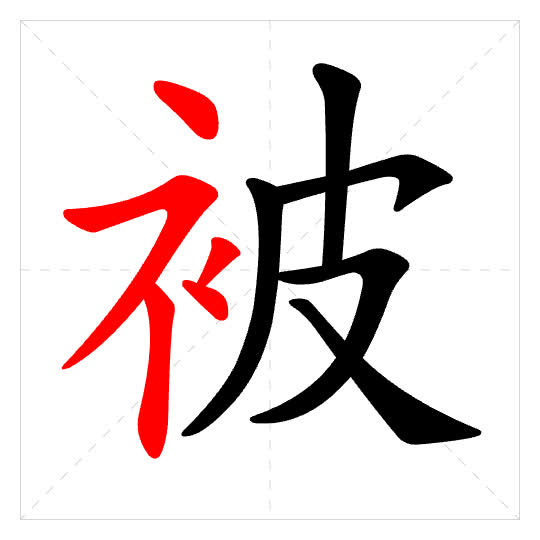
Basic Meaning
n
Often used in compounds like 棉被, 被套. It's a common household item.
A covering used during sleep; a quilt or blanket.
睡觉时覆盖身体的东西。
Words:
棉被夹被被子被窝被褥
Sentences:
- 妈妈新买的棉被很暖和。The new cotton quilt Mom bought is very warm.
- 他睡觉喜欢把被子裹得很紧。He likes to wrap the quilt tightly when sleeping.
prep
Structures are: Subject + 被 + (Agent) + Verb + Other elements. It's the standard grammatical marker for the passive voice. Compare with 让, 叫.
Indicates a passive sentence; introduces the agent of the action (the agent after 被 can sometimes be omitted).
用于被动句,引进动作的施事前面的主语是动作的受事(被字后表施事的名词有时省略)。
Words:
被批评被压迫被剥削被压迫民族被接走
Sentences:
- 我的手机昨天被偷了。My phone was stolen yesterday.
- 他因为迟到被老师批评了。He was criticized by the teacher for being late.
- 房子去年被重新装修过。The house was renovated last year.
v
This is a modern, somewhat humorous usage often seen online and in social commentary, e.g., to describe situations where someone is 'officially' or falsely reported to have achieved something.
Used before certain phrases to indicate a situation is forced, fabricated, or contrary to the reality (often with ironic or sarcastic nuance).
用在某些词语前,表示所说情况与事实不符,是被强加或被迫的(含讽刺、戏谑意)。
Words:
被就业被小康被满意被会员
Sentences:
- 有些公司为了数据好看,会让员工“被自愿”加班Some companies, to make their statistics look good, make employees 'be voluntarily' work overtime (implying it's forced).
- 他根本没去投票,结果发现自己“被代表”了He didn't vote at all, but found out he had 'been represented' (by someone else).
v
This is the verb-forming usage of 被. It often forms compound verbs like 被动 or describes the state of 'being V-ed' in a concise way.
Used before a verb to indicate a passive action.
用在动词前表示被动的动作。
Words:
被动被打被揍
Sentences:
- 在这个项目里,他一直处于被动的状态。In this project, he has been in a passive position the whole time.
- 小狗不小心被打了一下,马上躲开了。The puppy was accidentally hit and immediately ran away.
Writing & Component
Radical衤
Structureleft_right
Stroke Count10
Strokes丶㇇丨丿丶㇇丿丨㇇㇏