
据据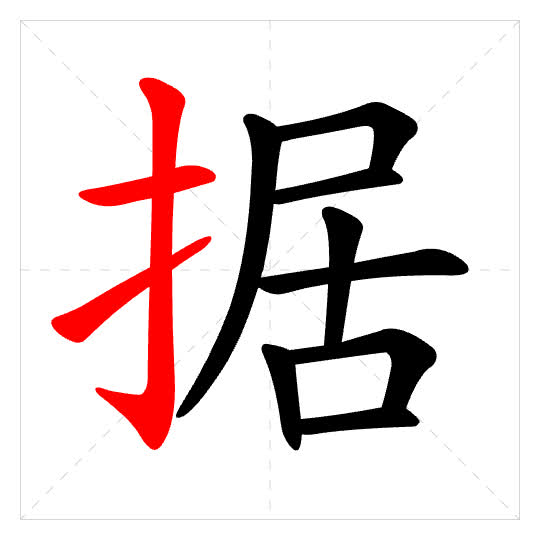
Basic Meaning
v
This sense often refers to militarily occupying or holding a stronghold. It carries a formal or strategic nuance.
to occupy; to seize; to hold (a place or territory).
占据;占有。
Words:
占据据为己有据守
Synonyms:
Sentences:
- 敌军占据了这个重要的山头。The enemy has occupied this important stronghold, making our advance difficult.
v
Often used in formal or military contexts to describe relying on an advantage (地形, 险要).
to rely on; to depend on.
凭依,倚仗。
Words:
据险固守据点
Sentences:
- 他们据险固守,敌人很难攻上来。They are firmly defending the position by relying on the treacherous terrain, making it hard for the enemy to attack.
prep
This is a very common preposition. Note that 据了解 (according to what is known) is a frequent set phrase in news or reports.
according to; based on.
按照;依据。
Words:
据理力争据实报告依据据了解
Sentences:
- 老师要求我们,写作文要据实报告。The teacher asked us to report truthfully when writing essays.
- 据了解,会议将在下周举行。It is understood that the meeting will be held next week.
n
Usually refers to a concrete piece of evidence or a document that serves as proof. Very common in legal, business, and administrative contexts.
proof; evidence; certificate; document.
可以用作证明的事物,凭证。
Words:
Sentences:
- 这是付款的凭据,请收好。This is the proof of payment, please keep it safe.
- 警方找到了证明他有罪的关键证据。The police found key evidence that proved his guilt.
n
A more abstract noun meaning the basis or grounds for an argument or claim. It is often used in formal discussions, reports, or academic writing (论点, 论据).
basis; foundation; grounds.
依凭;根据。
Words:
引经据典
Sentences:
- 他的结论缺乏可靠的数据作为论据。His conclusion lacks reliable data as its basis.
Writing & Component
Radical扌
Structureleft_right
Stroke Count11
Strokes一亅㇀𠃍一丿一丨丨𠃍一