
怪怪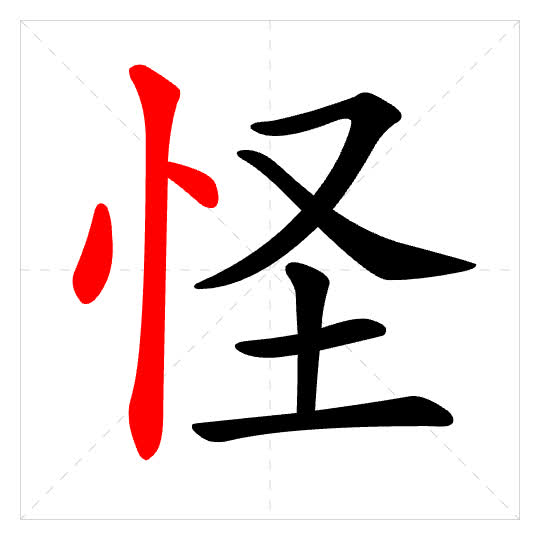
Basic Meaning
adj
Commonly used to describe things or behavior that are out of the ordinary. Often appears in compound words like 怪物 (monster), 古怪 (eccentric).
strange; weird; unusual
奇异,不平常。
Words:
怪诞怪论怪物怪模怪样奇形怪状古怪
Synonyms:
Antonyms:
Sentences:
- 他的发型很古怪。His hairstyle is very strange.
- 那个山洞的形状奇形怪状。The shape of that cave is bizarre.
v
Often used in the structure "对...不怪" or in set phrases. It describes a mental reaction.
to find strange; to be surprised by
觉得奇怪。
Words:
大惊小怪见怪不怪
Sentences:
- 别大惊小怪,这没什么。Don't make a fuss, it's nothing.
- 大家都觉得他的行为很奇怪。Everyone finds his behavior strange.
v
Used when assigning fault, often in the pattern "怪 + Person + 不好" or "怪不得...". Colloquial.
to blame; to complain about
责怪;埋怨。
Words:
怪罪责怪
Synonyms:
Antonyms:
夸
Sentences:
- 你不要老是怪我。Don't always blame me.
- 他考试不及格,只怪自己没复习。He failed the exam, he can only blame himself for not reviewing.
n
Refers to mythical creatures or people who are very strange. Also found in words like 妖怪.
monster; supernatural creature; eccentric person
妖怪;怪异的人或事物。
Words:
妖怪怪物
Sentences:
- 这部电影里有一个可怕的怪物。There is a scary monster in this movie.
- 在故事里,妖怪住在深山里。In the story, monsters live deep in the mountains.
Writing & Component
Radical忄
Structureleft_right
Stroke Count8
Strokes丶丶丨㇇㇏一丨一