
奇奇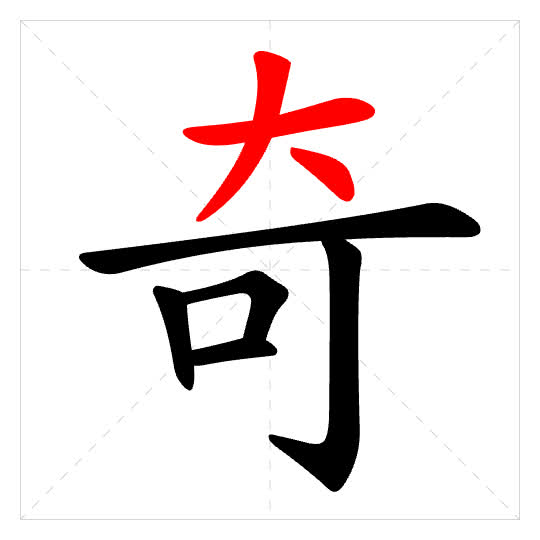
Basic Meaning
adj
Used to describe things or phenomena that are uncommon or remarkable.
rare; unusual; special; extraordinary.
罕见的;特殊的;非常的。
Words:
奇闻奇事奇观奇迹奇志
Sentences:
- 那是一个关于海底世界的奇观。That is a wondrous spectacle of the underwater world.
- 他在沙漠中创造了一个农业奇迹。He created an agricultural miracle in the desert.
adj
Often describes tactics, encounters, or events that come as a surprise.
unexpected; surprising; unpredictable.
出人意料的;令人难测的。
Words:
奇遇奇袭奇兵奇计出奇制胜
Sentences:
- 小说里有一段非常有趣的奇遇。There's a very interesting and unexpected adventure in the novel.
- 将军使用奇兵突袭了敌军后方。The general used an unexpected troop to launch a surprise attack on the enemy's rear.
v
Often used with 为 (wéi) as 为奇, or in literary constructions.
to be surprised; to find something strange.
惊异,引以为奇。
Words:
不足为奇惊奇世人奇之
Sentences:
- 他对这项新技术感到十分惊奇。He was very surprised by this new technology.
- 这种现象在当地人看来不足为奇。This phenomenon is not considered strange by the locals.
adv
An adverb used to intensify an adjective (e.g., 奇痒 'extremely itchy').
extremely; exceptionally; very.
表示程度深;非常;极。
Words:
奇痒奇丑奇冷奇缺
Sentences:
- 冬天这里的天气奇冷无比。In winter, the weather here is extremely cold.
Writing & Component
Radical大
Structuretop_bottom
Stroke Count8
Strokes一丿丶一丨𠃍一亅