
度度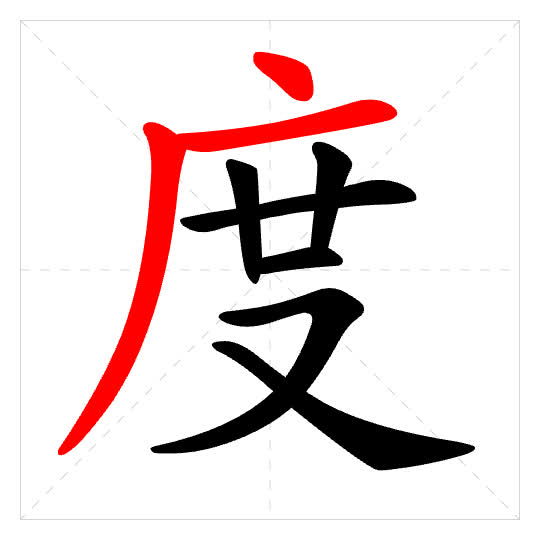
Basic Meaning
n
Used in scientific or technical contexts to describe measurable properties.
degree (indicating the extent of a property, such as hardness, heat, concentration, humidity, etc.)
表明物质的有关性质所达到的程度,如硬度、热度、浓度、湿度等。
Words:
Sentences:
- 今天温度很高,达到了35度。Today's temperature is very high, reaching 35 degrees.
- 这种材料的硬度不够,容易损坏。This material's hardness is insufficient and easily damaged.
n
Common in geometry, geography, and physics; examples include degrees of arc, kilowatt-hours, or diopters.
unit of measurement (e.g., for angles, electricity, or lens power).
计量单位名。①圆周的1/360的弧为1度。②平面角单位,1度圆弧所对的圆心角是1度,1度合60分。③经纬度单位,参看“经”、“纬”。④电量单位,1度即1千瓦小时。⑤眼镜焦度的单位,1度等于0.01米-1。
Sentences:
- 这个角是90度,所以它是一个直角。This angle is 90 degrees, so it is a right angle.
- 我家上个月用了200度电。My home used 200 kilowatt-hours of electricity last month.
n
Often used in abstract or qualitative contexts, such as progress or fame.
extent or level achieved by something.
事物所达到的程度。
Words:
知名度高度进度程度
Sentences:
- 他的知名度很高,很多人都认识他。His fame is very high; many people know him.
- 这个项目的进度很快,预计能提前完成。The progress of this project is very fast, and it is expected to be completed early.
n
Used to indicate moderation or excess, often in negative contexts like overdoing something.
limit or boundary.
限度。
Words:
过度适度无度挥霍无度劳累过度
Sentences:
- 他工作劳累过度,需要好好休息。He is overworked and needs to rest well.
- 饮食要适度,才能保持健康。Eating should be moderate to maintain health.
n
Refers to established systems or principles, such as laws or regulations.
rule, standard, or norm.
法则;标准。
Words:
Sentences:
- 这个公司有严格的制度,员工必须遵守。This company has strict rules, and employees must follow them.
- 法律是社会的法度,人人都要尊重。Law is the standard of society, and everyone should respect it.
n
Describes personal qualities like generosity or patience.
tolerance or magnanimity towards people or situations.
对人对事宽容的程度。
Words:
气度度量贤度心度韵度
Sentences:
- 他很有气度,从不和别人计较小事。He has great magnanimity and never argues over trivial matters with others.
- 她的度量很大,能原谅别人的错误。She has great tolerance and can forgive others' mistakes.
n
Used to describe how someone presents themselves, often in social contexts.
appearance, demeanor, or manner.
外貌;仪表。
Words:
Sentences:
- 他态度很好,总是微笑着帮助别人。He has a good attitude and always helps others with a smile.
- 这位演员风度翩翩,很受观众喜爱。This actor has an elegant demeanor and is well-liked by the audience.
q
Counts events or repetitions, e.g., 'once' or 'twice'.
measure word for occurrences or times.
量词。用于动作的次数。
Words:
梅开二度两年一度一度再度前度
Sentences:
- 这个活动两年一度,非常受欢迎。This event happens once every two years and is very popular.
- 他一度想放弃,但最后还是坚持下来了。He once thought about giving up, but in the end, he persevered.
v
Common in everyday language for activities like spending time or holidays.
to pass through (space) or experience (time).
越过(空间);经历(时间)。
Words:
度过度日虚度度假度日如年
Synonyms:
Sentences:
- 他每天虚度光阴,没有做任何有意义的事。He wastes time every day and doesn't do anything meaningful.
- 我们计划去海边度假一周。We plan to go to the seaside for a week's vacation.
v
Religious term; often used in rituals or teachings about salvation.
to liberate or convert in Buddhist or Daoist contexts.
佛教道教用语,指使众生从生死烦恼中解脱出来,到达自在的境界。也指僧尼道士劝人出家。
Words:
超度剃度
Sentences:
- 寺庙里的僧人会为逝者超度。Monks in the temple will perform liberation rites for the deceased.
- 他决定剃度出家,成为一名和尚。He decided to shave his head and become a monk.
n
Refers to periods like years or quarters, or areas like countries.
a specified range of time or space.
一定范围内的时间、空间。
Words:
国度季度年度月度
Sentences:
- 中国是一个历史悠久的国度。China is a country with a long history.
- 公司每季度都会召开一次会议。The company holds a meeting every quarter.
n
Used in phrases to indicate disregard or planning, often in formal contexts.
what is intended or considered.
所打算或考虑的。
Words:
置之度外度外
Sentences:
- 为了成功,他把个人安危置之度外。To succeed, he disregards his personal safety.
Writing & Component
Radical广
Structuresemi_enclosed
Stroke Count9
Strokes丶一丿一丨丨一㇇㇏