
岁岁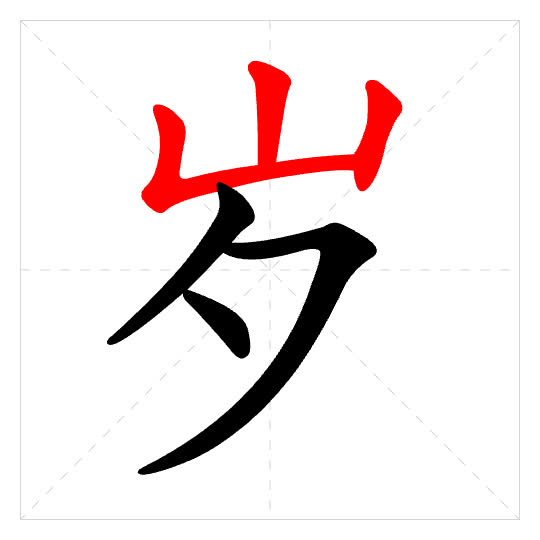
Basic Meaning
n
A classical/literary term for "year." It is common in set phrases or when describing the passage of time, e.g., 岁月 (sui4 yue4). The provided anchor words like 岁首, 岁末, 守岁 are also literary or idiomatic expressions.
year; a calendar year.
年。
Words:
岁首岁末岁月守岁岁暮
Synonyms:
Sentences:
- 岁末的街头巷尾充满了浓浓的节日氛围,张灯结彩。The streets and alleys at the end of the year are filled with a strong festive atmosphere, decorated with lanterns and colorful decorations.
- 过去的岁月总是令人难忘。The years gone by are always unforgettable.
q
The basic and most common usage. To ask someone's age, you say "你几岁?" For adults, it's more polite to use "您多大?" or "您多大年纪?" instead of "几岁?".
A measure word for a person's age in years.
表示年龄的单位。
Words:
周岁年岁同岁虚岁笄岁
Sentences:
- 我的小女儿今年五岁。My little daughter is five years old this year.
- 他比我大两岁。He is two years older than me.
- 那个小朋友,你几岁了?Little friend, how old are you?
n
This is a noun meaning "age" itself. It can be used in contexts like 同岁 (to be the same age). In modern usage, this sense is often covered by 年龄 (nian2 ling2) or sense 2 (the measure word).
Age; the number of years a person has lived.
年岁。
Words:
同岁
Sentences:
- 我和他同岁,都是1990年出生的。He and I are the same age; we were both born in 1990.
Writing & Component
Radical山
Structuretop_bottom
Stroke Count6
Strokes丨㇄丨丿㇇丶