
年年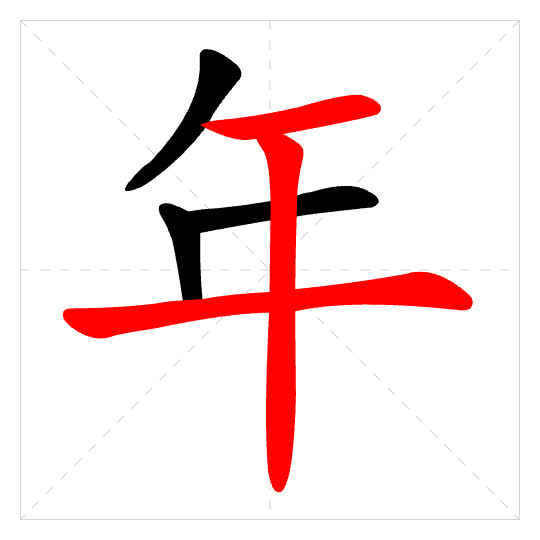
Basic Meaning
n
The basic unit of time. Note that the Chinese calendar is lunisolar, but this definition refers to the solar Gregorian year.
year (unit of time, the time it takes for the Earth to orbit the sun, 365 days in a common year, 366 in a leap year, with one leap year every four years).
时间的单位,公历1年是地球绕太阳一周的时间,平年365日,闰年366日,每4年有1个闰年。
Sentences:
- 去年我去了中国旅行。Last year I traveled to China.
- 明年我想学开车。Next year I want to learn to drive.
- 今年是2024年。This year is 2024.
q
Functions as a measure word (quantifier) when placed after a number. It is the standard classifier for years.
Used to count years (measure word for years).
用于计算年数。
Words:
三年五载两年三年百年十年
Sentences:
- 我在北京住了两年。I have lived in Beijing for two years.
- 这个项目需要三年完成。This project will take three years to complete.
n
Used as an attributive noun to describe something that happens every year or relates to a year.
annual; yearly.
每年的。
Words:
年会年鉴年产量年报年历
Sentences:
- 公司每年都会开年会。The company holds an annual meeting every year.
- 这是去年的年报。This is last year's annual report.
n
Often used in terms like 年龄 and 年纪. It refers to the number of years a person has lived.
age; years old.
年纪,岁数。
Words:
年纪年龄忘年交益寿延年年轻力壮
Sentences:
- 他的年龄是三十岁。His age is thirty years old.
- 你今年多大年纪?How old are you this year?
n
Used to categorize different phases of a person's life, such as 少年 (youth) or 中年 (middle age).
stage of life; period of life.
人的一生按岁数分成的阶段。
Sentences:
- 她正在享受她的青年时光。She is enjoying her youth.
- 人到中年,压力会变大。When people reach middle age, the pressure increases.
n
Refers to a specific historical period or era, often used with dynastic names or other time markers.
period; era; time.
时期;时代。
Words:
近年民国初年光绪年间明朝末年雍正年间
Sentences:
- 近年,科技发展很快。In recent years, technology has developed rapidly.
- 这个故事发生在明朝末年。This story took place at the end of the Ming Dynasty.
n
Specifically relates to agricultural output for a given year. Common in terms like 丰年 (bountiful year).
harvest of the year; annual crop yield.
一年中庄稼的收成。
Words:
年成年景丰年歉年登年
Sentences:
- 今年风调雨顺,是个丰年。This year has favorable weather, it's a bountiful year.
- 如果下雨太少,年成就会不好。If there is too little rain, the harvest will be poor.
n
Refers to the New Year holiday period, especially the Lunar New Year (Spring Festival) in Chinese context.
New Year; the beginning of the year; Chinese New Year festival.
年节,一年的开始。
Sentences:
- 新年快乐!Happy New Year!
- 中国人过年时会吃饺子。Chinese people eat dumplings during Chinese New Year.
n
Describes items specifically associated with celebrating the New Year, such as food and decorations.
related to the New Year (items/goods).
有关年节的(用品)。
Words:
年糕年画年货年礼年饭
Sentences:
- 妈妈买了很多年货。Mom bought a lot of New Year goods.
- 过年要吃年糕。We eat New Year cake during the New Year.
n
A historical term from the imperial examination system. It is rarely used in modern daily language.
relationship between those who passed the imperial examinations in the same year (historical).
科举时代称同年考中的关系。
Words:
年谊年兄年弟年伯
Sentences:
- 在古代,同年考中进士的人互称年兄。In ancient times, people who passed the imperial examination in the same year called each other 'nianxiong'.
Writing & Component
Radical干
Structuresingle
Stroke Count6
Strokes丿一一丨一丨