
害害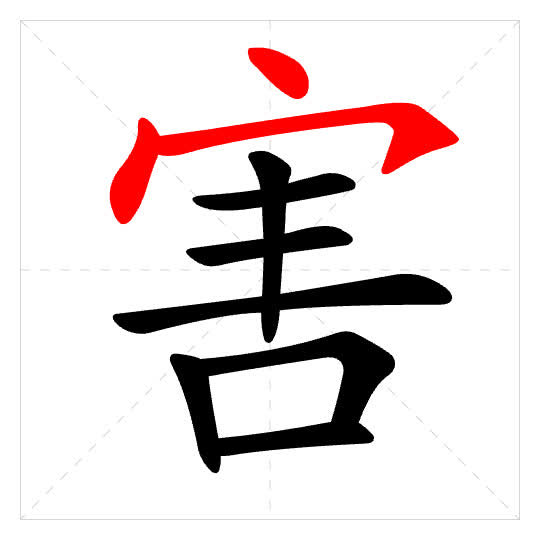
Basic Meaning
n
Often appears in set phrases. The antonym is 利 (benefit).
calamity; harm; something bad (opposite of 'benefit' or 'advantage').
祸害;坏处(跟“利、益”相对)。
Words:
灾害为民除害虫害水害祸害
Antonyms:
利益
Sentences:
- 洪水是一种严重的自然灾害。Floods are a serious type of natural disaster.
- 这种害虫对庄稼为害很大。This kind of pest causes great harm to the crops.
adj
Often used as an attributive before nouns to describe harmful things (e.g., 害虫 'harmful insect').
harmful; detrimental (opposite of 'beneficial').
有害的(跟“益”相对)。
Words:
害虫害鸟
Antonyms:
益
Sentences:
- 我们正在努力消灭这些害虫。We are working hard to exterminate these harmful insects.
- 看手机太多对眼睛有害。Looking at your phone too much is harmful to your eyes.
v
A causative verb. The object is typically the person or thing being harmed (e.g., 害人).
to cause harm to; to injure.
使受损伤。
Words:
害人不浅伤天害理危害损害迫害
Synonyms:
Sentences:
- 他说话不算话,害我白等了一个小时。He didn't keep his word, causing me to wait for an hour for nothing.
- 环境污染会危害大家的健康。Environmental pollution can harm everyone's health.
v
Used in formal or legal contexts related to causing death. Often found in compounds like 杀害.
to kill; to murder.
杀死。
Words:
杀害遇害图财害命谋财害命被害
Sentences:
- 警方正在调查这起谋杀害命的案件。The police are investigating this murder case.
v
Colloquial usage, mainly for physical ailments. Often used as 害+[disease name], e.g., 害病.
to contract (an illness); to suffer from.
发生(疾病)。
Words:
害病害眼
Synonyms:
患
Sentences:
- 他昨天开始害肚子疼。He started to suffer from a stomachache yesterday.
- 天气一变冷,我就容易害感冒。When the weather turns cold, I easily catch a cold.
v
Used in psychological verbs to indicate the experience of an emotion. Commonly used in words like 害怕 (to be afraid) and 害羞 (to be shy).
to feel (a negative emotion).
产生(不安的感觉或情绪)。
Words:
Sentences:
- 她第一次上台演讲,有点害羞。It was her first time giving a speech on stage, and she felt a bit shy.
- 别害怕,我会帮你的。Don't be afraid, I will help you.
Writing & Component
Radical宀
Structuretop_middle_bottom
Stroke Count10
Strokes丶丶㇇一一一丨丨𠃍一