
存存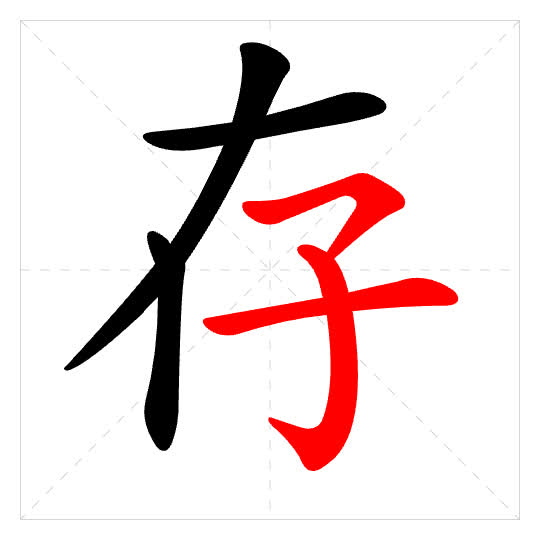
Basic Meaning
v
In this sense, 存 is often used as a verb to describe the state of being, existence, or survival of something. It can be combined with other words like 存在, 生存.
to exist; to be alive
存在,事物出现后没有消失;活着。
Words:
残存存活存亡共存生存存在
Sentences:
- 这个物种在野外依然存活。This species still survives in the wild.
- 这个问题至今仍然存在。This problem still exists today.
v
This sense refers to putting away or keeping something for later use, often physically or digitally.
to store; to preserve
储存;保存。
Words:
封存存粮存档
Synonyms:
储
Sentences:
- 我把重要的文件都存到了电脑里。I stored all the important files on my computer.
- 这瓶药要密封并存放在阴凉处。This bottle of medicine needs to be sealed and stored in a cool place.
v
This sense is specifically for financial activities, like putting money into a bank account.
to deposit money
储蓄。
Words:
存款存折整存整取零存整取
Synonyms:
蓄
Sentences:
- 我每个月都会去银行存钱。I go to the bank to deposit money every month.
- 你的存款有多少?How much deposit do you have?
v
This sense involves temporarily placing an item in a designated location, such as a locker or counter, often with the expectation of retrieving it later.
to leave something with someone/somewhere (for safekeeping)
寄放。
Words:
存放寄存存车处存行李
Synonyms:
寄
Sentences:
- 我先去存行李,然后再去安检。I'll go to leave my luggage first, then go through security.
- 电影院旁边有个存车处。There is a bicycle parking area next to the cinema.
v
This sense means to maintain or hold onto something without removing or disposing of it.
to retain; to keep
保留下来。
Words:
存而不论存疑存档存根求同存异
Synonyms:
Sentences:
- 这份文件需要存根以备核查。This document needs to retain a stub for verification.
- 对于这个争议,我们暂时存而不论。Regarding this controversy, we will temporarily keep it without discussing it.
v
This sense often describes the quantity or amount that is leftover or available.
to have remaining; to be in stock
结存;余留。
Words:
库存
Synonyms:
余
Sentences:
- 我们的库存已经不多了。Our stock is already running low.
- 这本书卖得很好,现在只结存了几本。This book sells very well, and now only a few copies are left in stock.
v
This sense refers to holding something in your mind or heart, such as a thought, hope, or intention.
to harbor (an idea or feeling)
心里怀着(某种想法)。
Words:
存心心存侥幸
Sentences:
- 你别误会,我不是存心要伤害你,只是当时太着急了。Don't misunderstand, I didn't mean to hurt you, I was just too anxious at the time.
- 你别心存侥幸,还是要认真准备考试。Don't harbor any hope of luck; you still need to prepare seriously for the exam.
Writing & Component
Radical子
Structuresemi_enclosed
Stroke Count6
Strokes一丿丨㇇亅一