
够够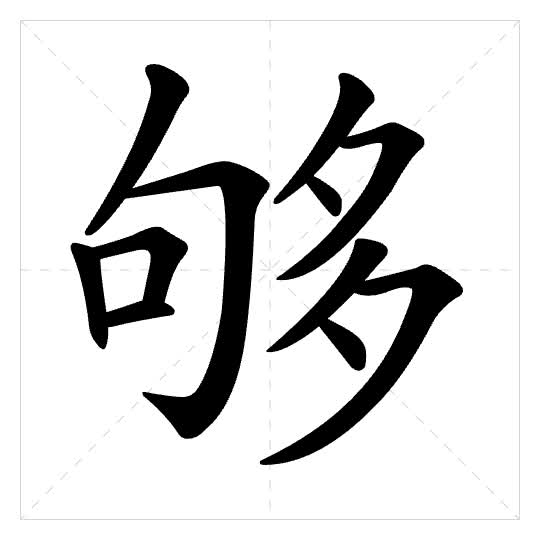
Basic Meaning
v
Often used with nouns like 钱(qián), 时间(shíjiān), or with resultative complements like 不够(bùgòu), 够用(gòuyòng).
to be enough; to be sufficient (in quantity to meet a need).
数量上可以满足需要。
Words:
Sentences:
- 这些食物够十个人吃。This food is enough for ten people.
- 我的钱不够买这本新书。My money isn't enough to buy this new book.
adv
Often used before adjectives in colloquial speech to add emphasis, e.g., 够狠, 够累.
expresses high degree when placed before an adjective. Can often be translated as 'quite', 'really', or 'awfully'.
副词,用在形容词前,表示程度深。表示程度高。
Words:
够味够呛够受够劲够受的
Antonyms:
微稍略寡浅
Sentences:
- 今天天气够热的。The weather today is really hot.
- 他说话够直接的,我都不知道该怎么回答。He was really direct when he spoke, I didn't even know how to respond.
v
Usually used with the potential complements 得着/不着. Common in everyday physical actions.
to reach for or try to get something that is hard to reach.
把手或工具等伸向比较难以达到的地方去取物或接触东西。
Words:
够不着够得着够着
Sentences:
- 柜子太高了,我够不着最上面的盒子。The cabinet is too high, I can't reach the box on the top.
- 你能帮帮我吗?我够不着那个开关。Can you help me? I can't reach that switch.
adv
The standard is often implied or stated in the context. Often confused with sense 2, but this sense focuses on meeting a benchmark (e.g., 够高 for a height requirement).
to be up to (a standard) or to meet (a requirement); placed before an adjective.
修饰形容词,表示达到或超过标准、限度。
Words:
够味够格够过儿够意思够受的
Sentences:
- 你的普通话水平已经够格当老师了。Your Mandarin proficiency is already up to the standard to be a teacher.
- 这张桌子够大吗?能坐下八个人吗?Is this table big enough? Can it seat eight people?
adj
This conveys a sense of annoyance or saturation. Often used in contexts of hearing or experiencing something too much.
to have had enough of something; to be fed up with (due to excess).
因过多而表示厌烦。
Sentences:
- 这种话我听够了,不想再听了。I'm fed up with hearing this kind of talk; I don't want to hear it anymore.
- 别玩游戏了!我都看够了。Stop playing games! I've seen enough of it.
Writing & Component
Radical夕
Structureleft_right
Stroke Count11
Strokes丿𠃌丨𠃍一丿㇇丶丿㇇丶