
后后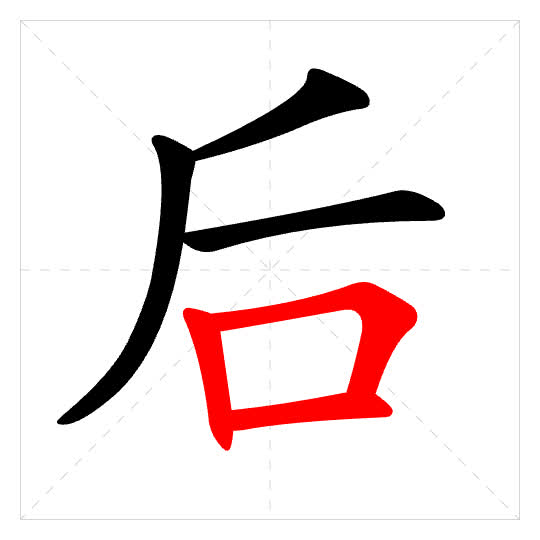
Basic Meaning
n
常用于表示时间的先后顺序,如 '后天' (the day after tomorrow)。
the future; later in time (opposite of 'first' or 'before')
没有来到的;时间上比较晚出现的。(跟“先、前相对)。
Sentences:
- 后天我们要去旅行。We are going on a trip the day after tomorrow.
- 我们先看电影,后吃饭。We'll watch the movie first, and then eat.
- 今后我会更加努力。From now on, I will work harder.
n
常用于表示空间位置,如 '后面' (behind)。
the back; the rear; the part behind (opposite of 'front')
方位词。背面的部分;人或物背面所朝的方向(跟“前”相对)。
Words:
Synonyms:
Antonyms:
Sentences:
- 我家房子后面有一个花园。There is a garden behind my house.
- 请坐在我的后面。Please sit behind me.
n
用于表示顺序上的末尾,如 '后排' (back row)。
the end part in order; last in sequence (opposite of 'front' or 'first')
方位词。次序居于末尾的(跟“前、先”相对)。
Words:
后排后十五名后座后续
Sentences:
- 他坐在教室的后排。He sits in the back row of the classroom.
- 比赛的最后三名有奖励。The last three in the competition get a prize.
n
通常指子孙后代,是一个集合概念。
descendants; offspring; posterity
后代的人,指子孙等。
Words:
后代无后后人
Sentences:
- 我们要为后代保护环境。We must protect the environment for our descendants.
- 他是一位伟大的科学家,后人会记住他。He is a great scientist, and posterity will remember him.
n
特指帝王的妻子,如 '皇后'。这是一个历史/正式用语。
empress; queen; wife of an emperor
皇后,帝王的妻子。君主的妻妾。
Words:
皇后后妃太后皇太后
Sentences:
- 皇后在历史上很有权力。Empresses had great power in history.
- 这位太后统治了国家很多年。This Empress Dowager ruled the country for many years.
n
用于表示继亲关系,如 '后妈' (stepmother)。口语中常用。
step- (in family relationships)
后继的(亲属关系)。
Words:
后爹后妈后继后侄
Sentences:
- 我的后妈对我很好。My stepmother is very good to me.
- 他有一个后爹和一个亲妈。He has a stepfather and a biological mother.
n
常作为前缀,表示某事件之后,如 '后工业化' (post-industrialization)。
post-; after (indicating time following an event)
方位词。指某事物产生之后。
Words:
后工业化
Antonyms:
Sentences:
- 我们生活在一个后工业化时代。We live in a post-industrial era.
- 疫情后,很多人开始在家工作。After the pandemic, many people started working from home.
Writing & Component
Radical口
Structuresemi_enclosed
Stroke Count6
Strokes丿丿一丨𠃍一