
前前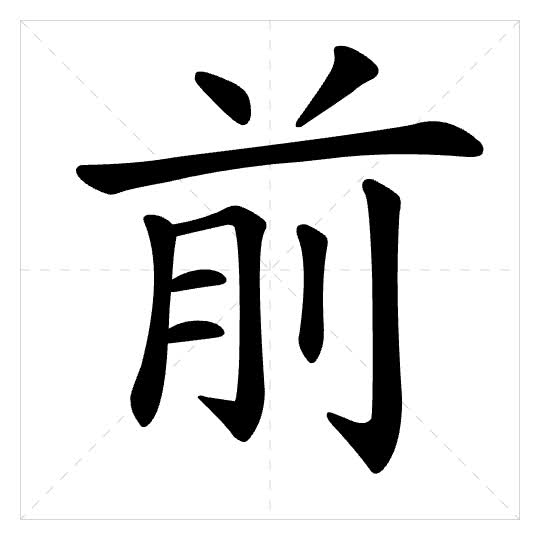
Basic Meaning
n
This is the most basic spatial sense. In phrases like 前边, 前方, it refers to a location or direction.
front (noun); the forward-facing part or direction (opposite of 后).
方位词。正面的部分;人或物正面所朝的方向(跟“后”相对)。
Words:
Antonyms:
Sentences:
- 我家房子前边有一个小花园。There is a small garden in front of my house.
- 请往前方看。Please look ahead.
v
An archaic or literary usage. In modern language, this sense is usually seen in idioms like 勇往直前 or compound words like 前进.
to go forward; to advance.
向前行进。
Words:
停滞不前勇往直前前冲前进前迈
Sentences:
- 在困难面前,我们要勇往直前。In the face of difficulties, we must advance courageously.
- 队伍停滞不前,因为路被堵住了。The procession came to a halt and could not advance because the road was blocked.
n
Used to describe something that existed or was valid before the present. 前夫 (ex-husband), 前身 (predecessor).
former; previous (e.g., referring to a former state, person, or institution).
方位词。从前的(有时指现在改变了名称、身份的机构或人等)。
Words:
前例前人前贤前夫前身
Sentences:
- 他是我的前同事。He is my former colleague.
- 这座博物馆的前身是一个工厂。The predecessor of this museum was a factory.
n
Prefixed to nouns to indicate a stage before the formal establishment of a discipline or system, e.g., 前科学 (pre-science).
pre-; before (the emergence of something).
方位词。指某事物产生之前的。
Words:
前科学前资本主义
Sentences:
- 这是一个关于前资本主义社会的讨论This is a discussion about pre-capitalist society.
n
Used in terms concerning one's future path or potential, e.g., 前途, 前程. Often carries a positive connotation.
future; prospects (used for looking ahead).
方位词。未来的(用于展望)。
Words:
前程前景前途前程似锦各奔前程
Sentences:
- 他年轻有为,前途光明。He is young and capable, with a bright future.
- 这个项目的前景看起来很乐观。The prospects for this project look very optimistic.
n
Specifically refers to a military or combat front. The phrase 支前 means "to support the front lines".
front line; battlefront.
前线;前方。
Words:
支前前线前方
Sentences:
- 士兵们被派往前线。The soldiers were sent to the front line.
- 后方的人民积极支前。The people in the rear actively support the front lines.
Writing & Component
Radical刂
Structureleft_right
Stroke Count9
Strokes丶丿一丨𠃌一一丨亅