
受受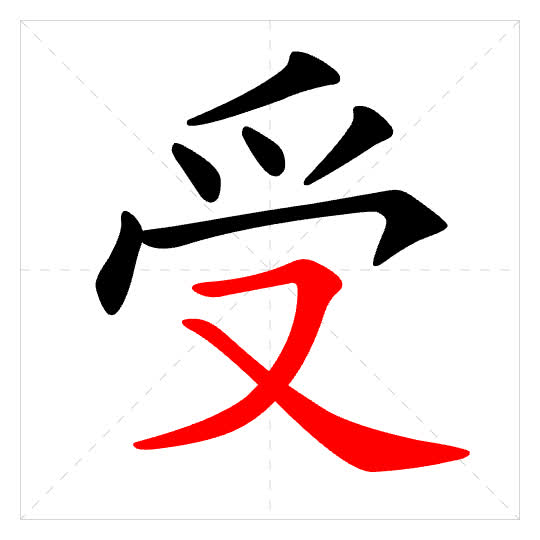
Basic Meaning
v
This sense is generally neutral or positive, indicating the passive act of receiving something. Often used in contexts like receiving gifts, benefits, or training. It can be used with '得 (de2)' to indicate possibility, e.g., 受得了.
to receive; to accept (something offered)
接纳,接受。
Words:
受礼受贿受益受训受教育享受
Synonyms:
Antonyms:
拒
Sentences:
- 我收到了礼物,并接受了她的道歉。I received the gift and accepted her apology.
- 他接受了新工作的培训,很快就能受益。He received training for the new job and will soon benefit from it.
- 她享受假期的时光,完全不受打扰。She enjoys her holiday time, completely undisturbed.
v
This sense is negative, indicating the passive experience of harm, disaster, or criticism. The object is typically an undesirable event or condition.
to suffer; to undergo (something negative)
遭受;承受;蒙受。
Words:
受挫受害受灾受罪受批评受委屈
Synonyms:
Sentences:
- 这个地区去年遭受了严重的灾害。This region suffered a severe disaster last year.
- 他因为迟到而受到了老师的批评。He received criticism from the teacher for being late.
- 项目受挫后,他们需要重新制定计划。After the project suffered a setback, they needed to remake the plan.
v
This sense focuses on the ability or inability to tolerate a difficult situation or burden. Commonly appears in the fixed phrases 受不了 (can't bear/stand) and 受得了 (can bear/stand).
to endure; to bear; to withstand
忍受;禁受。
Words:
受不了受得住受累受苦
Synonyms:
忍
Sentences:
- 这里的夏天太热了,我实在受不了。The summer here is too hot; I really can't bear it.
- 他很坚强,能受得住这些压力。He is very strong and can withstand these pressures.
- 为了家人,他愿意受苦受累。For his family, he is willing to endure hardship and toil.
Writing & Component
Radical又
Structuretop_bottom
Stroke Count8
Strokes丿丶丶丿丶㇇㇇㇏