
历历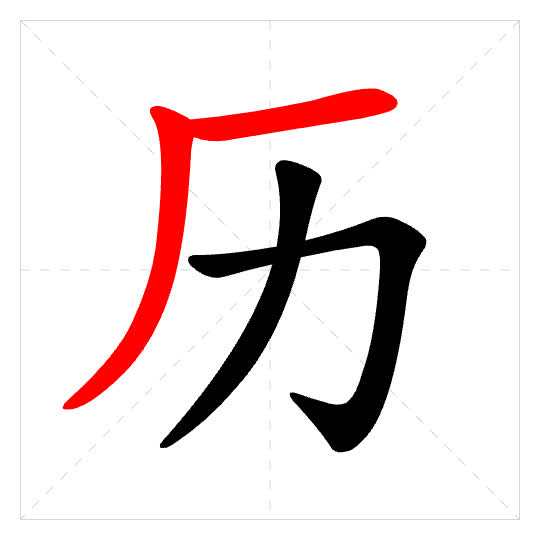
Basic Meaning
v
Often used in formal or descriptive contexts to indicate undergoing events or processes.
to experience; to go through
经历,经过。
Words:
历程历时半年身历其境历尽甘苦历时十年
Sentences:
- 他历尽甘苦,终于成功了。He went through hardships and finally succeeded.
- 这次旅行让我身历其境,感受很深。This trip made me experience it firsthand, and I felt deeply.
adj
Used as an adjective to modify nouns referring to historical or sequential events.
past; previous; all past (e.g., times, generations)
过去的,经过了的,统指过去的各个或各次。
Words:
历次历代历届历年历史历朝
Sentences:
- 历代皇帝都住在这个宫殿里。All past emperors lived in this palace.
- 历次比赛他都参加了。He participated in all previous competitions.
adv
Functions as an adverb to indicate doing something in sequence or thoroughly.
one by one; successively
副词,遍,逐一。
Words:
历览历任历访名贤历访名家历访各校
Synonyms:
逐遍
Sentences:
- 他历任多个重要职位。He successively held multiple important positions.
- 我们历访各校,收集了很多意见。We visited each school one by one and collected many opinions.
n
Refers to systems like the Gregorian or lunar calendar.
calendar system; method of calculating dates and seasons
推算年月日和节气的方法;历法。
Words:
历法公历农历阳历阴历
Sentences:
- 公历是国际通用的历法。The Gregorian calendar is an internationally used calendar system.
- 农历基于月亮的周期。The lunar calendar is based on the moon's cycle.
n
Commonly used for physical or digital calendars that display dates.
calendar (as a book, chart, etc.)
记录年、月、日、节气的书、表等。
Words:
历书挂历年历日历台历
Sentences:
- 墙上挂着一个漂亮的挂历。There is a beautiful wall calendar hanging on the wall.
- 我每天看日历安排事情。I check the calendar every day to plan things.
n
Often used in contexts like personal or professional records.
record of experiences; history
经历过的事情。
Words:
学历病历简历阅历履历
Sentences:
- 他的简历写得很详细。His resume is written in great detail.
- 丰富的阅历让她更成熟。Rich experiences made her more mature.
Writing & Component
Radical厂
Structuresemi_enclosed
Stroke Count4
Strokes一丿𠃌丿