
功功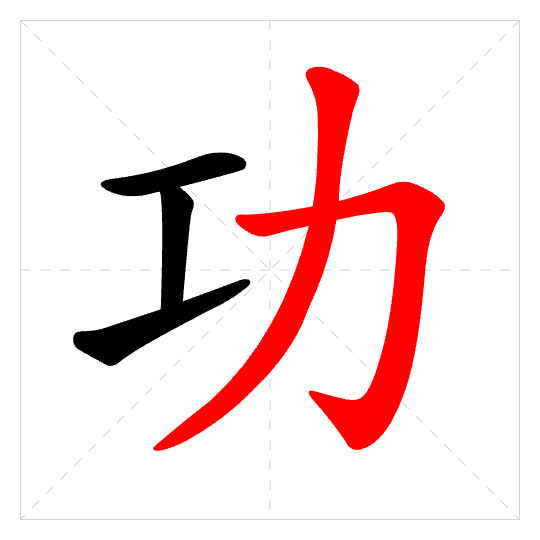
Basic Meaning
n
Used in contexts where merit or commendable service is recognized, often contrasted with 过 (fault). Common in official, historical, or heroic contexts. Frequently appears in compounds like 功劳, 立功.
achievement or contribution deserving recognition (often in contrast to 'mistakes')
功劳,贡献较大的成绩;(跟“过”相对)。
Words:
功劳立功功臣一等功战功
Antonyms:
Sentences:
- 记功而不记过,并不能全面评价一个人。Recording only merits and not faults cannot fully evaluate a person.
n
Focuses on the outcome or fruit of effort, especially for substantial projects or endeavors. Often used in phrases describing the relationship between effort and result (e.g., 事半功倍).
effect, result, or the accomplishments (usually of significant scale)
成效和表现成效的事情(多指较大的)。
Words:
成功功亏一篑急功近利事半功倍功效
Sentences:
- 找到正确的学习方法,往往事半功倍Finding the right study method often yields twice the result with half the effort.
- 这项工程对城市发展功不可没。This project's contribution to the city's development is indispensable.
n
Refers to acquired expertise, technique, or foundational skill in a specific art, craft, or discipline. Commonly used for arts, sports, and training.
skill, ability, technical proficiency
本领;技术修养。
Words:
练功唱功基本功功底功夫
Sentences:
- 他的京剧唱功非常好。His Peking opera singing skill is excellent.
- 每天练功是保持舞蹈基本功的关键。Practicing daily is key to maintaining foundational dance skills.
n
A specialized scientific term referring to the energy transfer when force causes displacement. Used strictly in physics contexts.
(physics) work
物理学上指在外力作用下,物体顺力的方向移动,这个力就对物体做了功。
Words:
功率做功
Sentences:
- 这台机器的功率很大,做的功也多。This machine has high power and does a lot of work.
- 在物理学中,力和距离共同决定做功的大小。In physics, force and distance together determine the amount of work done.
Writing & Component
Radical力
Structureleft_right
Stroke Count5
Strokes一丨㇀𠃌丿