
先先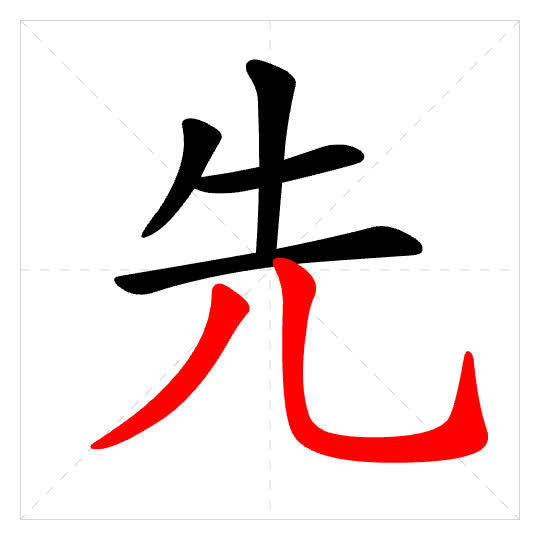
Basic Meaning
n
Used as a noun to refer to something or someone that comes first in time or sequence.
first; earlier; in advance (as opposed to '后')
时间或次序在前的(跟“后”相对)。
Words:
先例先进先期事先领先
Antonyms:
Sentences:
- 书册教育在我国从古到今不乏先例。There are many precedents for book-based education in my country, from ancient times to the present.
adv
An adverb used to indicate that an action or event occurs before another.
first; beforehand
表示某一行为或事件发生在前。
Synonyms:
Sentences:
- 他比我先到。He arrived before me.
adv
Commonly used in constructions like '先…再说' (let's ... for now).
for now; temporarily
暂时。
Sentences:
- 我们先去吃饭,然后再看电影。Let's go eat for now, and then we can watch the movie.
- 这个问题很复杂,先放一放再说。This problem is very complicated; let's put it aside for now.
n
Refers to one's forebears or earlier people.
ancestor; forefather; previous generation
祖先;上代。
Words:
先人先民祖先先辈
Synonyms:
Antonyms:
Sentences:
- 这些习俗是我们的先人留下的宝贵遗产。These customs are the precious legacy left by our ancestors.
- 我们永远不能忘记先辈们的贡献。We must never forget the contributions of our forebears.
adj
Used as an honorific adjective before kinship terms or titles to refer to someone who has passed away, e.g., 先父 (my late father).
deceased; late (with respect)
已经死去的(含尊重意)。
Words:
先父先烈先哲先贤先师
Sentences:
- 我的先父曾是一位受人尊敬的医生。My late father was a respected doctor.
- 我们要继承先烈的革命精神。We must carry forward the revolutionary spirit of the martyrs.
Writing & Component
Radical儿
Structuretop_bottom
Stroke Count6
Strokes丿一丨一丿乚