
优优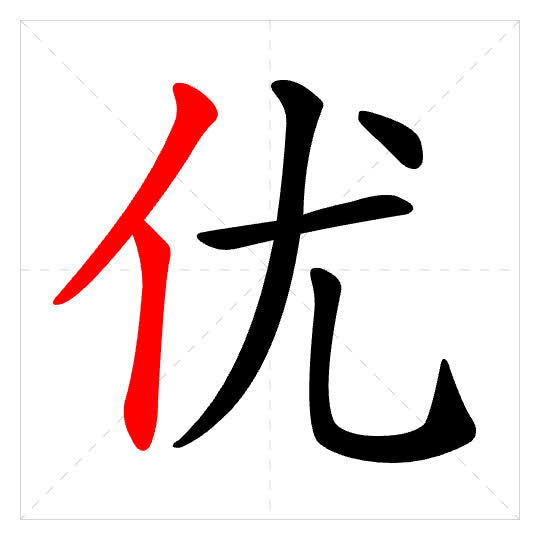
Basic Meaning
adj
Often used to describe quality, performance, or moral character. Commonly seen in words like 优秀 (excellent) and 优点 (merit/advantage).
good; excellent; fine; superior
优良;美好(跟“劣”相对)。
Words:
Synonyms:
好良
Antonyms:
劣差
Sentences:
- 她的学习成绩一直很优秀。Her academic performance has always been excellent.
- 这个地方的自然风景非常优美。The natural scenery of this place is extremely beautiful.
adj
This sense is more classical or literary. It describes sufficiency in resources or generous conditions, often in set phrases like 优厚 (generous) or 待遇优渥 (high compensation).
(literary) ample; abundant; affluent
〈书〉充足;富裕。
Words:
优厚优裕优渥优遇待优
Sentences:
- 公司为员工提供了优厚的福利待遇。The company provides employees with generous benefits.
v
Used in contexts involving policy, social treatment, or special care, e.g., 优抚 (special care for families of military personnel).
to give preferential treatment; to treat favorably
优待;厚待。
Words:
优抚优遇拥军优属优崇优复
Sentences:
- 政府政策优先优惠老年人。Government policies give priority and preferential treatment to the elderly.
- 这家商店对会员有特别的优待。This store offers special preferential treatment to its members.
n
An archaic term for stage performers, especially in classical Chinese theater. It is not commonly used in modern casual speech but appears in historical contexts.
(historical) performer; actor/actress
旧时指演戏的人。
Words:
优伶名伶女优优谏小优
Sentences:
- 在元代,许多优伶的表演很受欢迎。During the Yuan Dynasty, the performances of many actors were very popular.
Writing & Component
Radical亻
Structureleft_right
Stroke Count6
Strokes丿丨一丿乚丶