
事事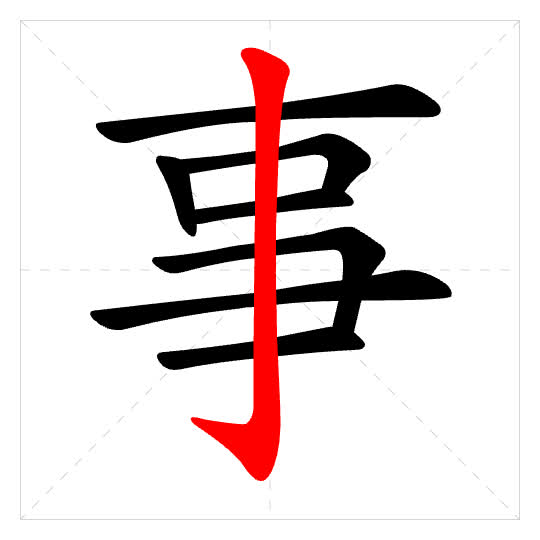
Basic Meaning
n
Often used in compound words like 事情, 事务, 公事, 私事, 家事. Can be used in idioms such as 事半功倍, 事出有因, 事必躬亲, 事过境迁, 好人好事, 国家大事.
matter; affair; thing (referring to any phenomenon or activity in nature and society)
(事儿)事情,自然界和社会中的一切现象和活动。
Words:
事例事务公事私事家事事半功倍事出有因事必躬亲事过境迁好人好事国家大事
Sentences:
- 他每天处理很多公事和私事。He deals with a lot of public and private matters every day.
- 这是一个好人好事的故事。This is a story about good deeds and good people.
n
Commonly used in contexts involving trouble or mishaps, as in 出事, 平安无事, 事故.
accident; incident
事故。
Words:
出事平安无事事故
Sentences:
- 路上发生了一起交通事故。A traffic accident happened on the road.
- 幸好今天平安无事。Fortunately, today was without incident.
n
Refers to employment or professional activities, often seen in words like 同事, 谋事, 找事儿.
job; occupation; work
职业,工作。
Words:
Sentences:
- 他正在谋事,想换一份更好的职业。He is looking for a job and wants to change to a better occupation.
n
Used in contexts involving disputes, responsibilities, or involvement, as in 事端, 出事, 闹事, 肇事.
relation; responsibility
关系或责任。
Words:
事端出事闹事肇事
Sentences:
- 他们因为小事闹事,结果警察来了。They caused trouble over a small matter, and the police came as a result.
v
A verb form meaning to perform or be involved in an activity, often used in phrases like 大事宣扬, 不事生产, 无所事事, 不事劳动.
to do; to engage in
做;从事。
Words:
大事宣扬不事生产无所事事不事劳动
Sentences:
- 他大事宣扬自己的成就。He greatly publicizes his achievements.
- 有些人无所事事,整天玩手机。Some people have nothing to do and play with their phones all day.
Writing & Component
Radical亅
Structuresingle
Stroke Count8
Strokes一丨𠃍一𠃍一一亅