
迷迷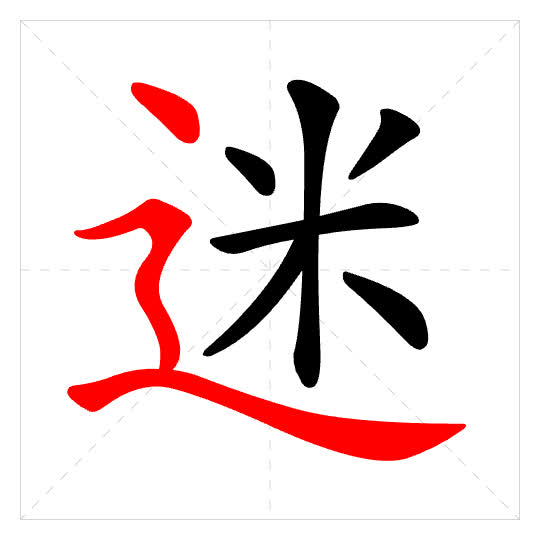
Basic Meaning
v
Used for situations where one loses direction, clarity, or judgment. Often used with 方向, 路, or in metaphorical contexts.
to be confused; to be lost; to be unable to discern or judge.
分辨不清,失去了辨别、判断的能力。
Words:
迷航迷惑迷路迷失方向当局者迷迷航知返
Sentences:
- 他在森林里迷路了。He got lost in the forest.
- 这个问题让我很迷惑。This question confuses me a lot.
v
Describes a deep, often positive (but sometimes excessive) attachment or fascination with a person, hobby, or activity.
to be addicted to; to be fascinated by something.
沉醉于某种事物;对某种事物特别喜爱。
Words:
入迷着迷执迷不悟迷恋沉迷
Sentences:
- 她最近沉迷于一部电视剧。She's recently addicted to a TV series.
- 这个孩子对电子游戏非常着迷。This child is fascinated by video games.
v
Describes the action of causing someone else to be lost, confused, or captivated.
to confuse; to bewilder; to enchant.
使看不清;使迷惑;使陶醉。
Words:
财迷心窍迷人财迷迷路当局者迷
Sentences:
- 夜景的灯光迷人。The lights of the night scenery are enchanting.
- 复杂的选项容易迷住用户。Complex options can easily bewilder users.
n
Typically follows the object of fascination, e.g., 球迷 (sports fan), 影迷 (movie fan). The word 迷 itself can be used as a suffix.
a fan; an addict; someone deeply fascinated by something.
沉醉于某一事物的人。
Words:
迷魂汤迷人眼目财迷心窍球迷财迷
Sentences:
- 他是个忠实球迷。He is a loyal sports fan.
- 我哥哥是个科技迷。My older brother is a tech enthusiast.
Writing & Component
Radical辶
Structuresemi_enclosed
Stroke Count9
Strokes丶丿一丨丿丶丶㇋㇏