
跟跟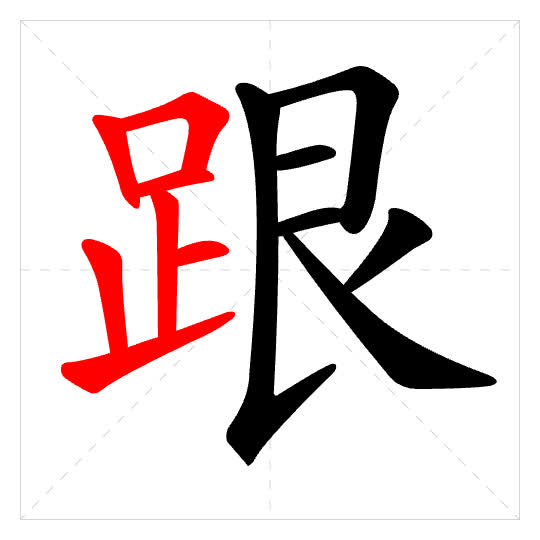
Basic Meaning
n
heel (of the foot, shoe, or sock)
脚的后部或鞋袜的后部。
Words:
脚后跟袜后跟儿脚跟高跟儿
Sentences:
- 这双新鞋磨得我脚后跟很疼。These new shoes are rubbing my heel and it hurts.
- 她喜欢穿高跟儿鞋。She likes wearing high heels.
v
Commonly used to mean physically following someone or something. See also 跟着 and 跟上 for common patterns.
to follow behind; to go along with
在后面紧接着向同一方向行动。
Words:
跟上跟得上跟着紧跟跟随
Sentences:
- 小朋友们都跟着老师往前走。The children all follow the teacher and walk forward.
- 快跟上,公共汽车要开了!Hurry up and catch up, the bus is about to leave!
v
This sense is somewhat traditional and can imply a woman's dependence on a man.
to commit oneself to a person; (often) to marry (a man)
委身于人;嫁给某人。
Words:
跟从跟随跟着
Synonyms:
嫁
Sentences:
- 他要是不好好工作,我就不跟他了。If he doesn't work properly, I'm not going to stay with him.
prep
Functions like English 'with' or 'to'. Pattern: Subject + 跟 + Target + Verb (e.g., '我跟他说话' – 'I speak with him').
with; to (introducing the target of an action: a) together with, b) towards)
引进动作的对象。a)同。b)向。
Sentences:
- 我想跟你商量一件事。I'd like to discuss something with you.
- 他刚才跟我说他明天不来。He just told me he's not coming tomorrow.
prep
Used in comparisons of similarity or difference. Often appears in the structures '跟...一样' (same as...) and '跟...不一样' (different from...).
compared with; same as
引进比较异同的对象;同。
Sentences:
- 我的手机跟你的一样,都是白色的。My phone is the same as yours, both are white.
- 北京的气候跟上海很不一样。The climate in Beijing is very different from Shanghai's.
conj
Used to connect nouns, functioning like 和 (he2) in modern Mandarin.
and (conjunction)
表示联合关系;和。
Synonyms:
Sentences:
- 苹果跟香蕉,你更喜欢哪个?Which do you prefer, apples or bananas?
- 我今天要买牛奶跟面包。I need to buy milk and bread today.
Writing & Component
Radical足
Structureleft_right
Stroke Count13
Strokes丨𠃍一丨一丨㇀𠃍一一𠄌丿㇏