
缺缺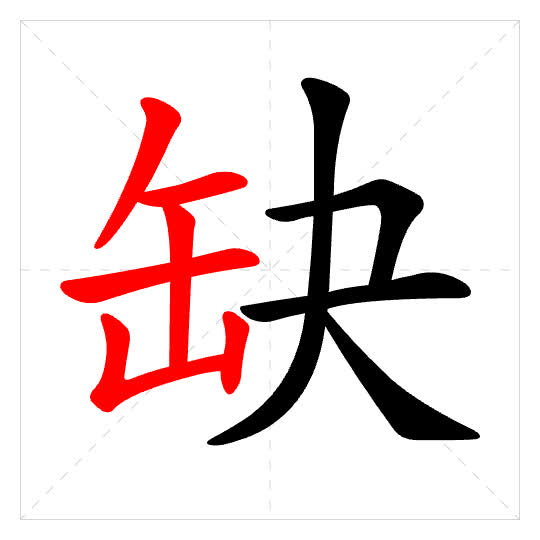
Basic Meaning
v
Often used to indicate a shortage of abstract things like 'time', 'money', or concrete items like 'water'. Also used in set phrases like '缺人手' (short-staffed).
to lack; to be short of.
缺乏;短少。
Words:
残缺阴晴圆缺缺口缺人
Synonyms:
Sentences:
- 这个项目还缺一些资金。This project is still short of some funding.
v
Specifically refers to being absent from a scheduled event, meeting, or class. Commonly collocates with nouns like 会议, 课, 席.
to be absent; to fail to attend.
该出席而未出席。
Words:
缺点缺陷缺憾缺勤缺课缺席
Sentences:
- 他今天身体不舒服,所以缺课了。He wasn't feeling well today, so he was absent from class.
- 重要会议不能随便缺席。You shouldn't be absent from important meetings without good reason.
n
This is a slightly more formal or written usage. In modern spoken Chinese, '空缺' or '职位空缺' is more common.
vacancy; opening (for a job or position).
旧时指官职的空额,也泛指一般职务的空额。
Words:
缺席缺勤缺课出缺肥缺
Sentences:
- 公司市场部还有一个经理的缺。There is still a vacancy for a manager in the company's marketing department.
adj
Almost always used as an attributive adjective before nouns like 点 and 陷, forming the common words '缺点' (shortcoming) and '缺陷' (defect/flaw).
incomplete; flawed; imperfect.
不完善。
Words:
缺点缺陷
Antonyms:
圆
Sentences:
- 这个计划有个明显的缺点。This plan has an obvious shortcoming.
- 这部手机设计很好,但电池有缺陷。This mobile phone has a great design, but the battery has a flaw.
Writing & Component
Radical缶
Structureleft_right
Stroke Count10
Strokes丿一一丨㇄丨𠃍一丿㇏