
省省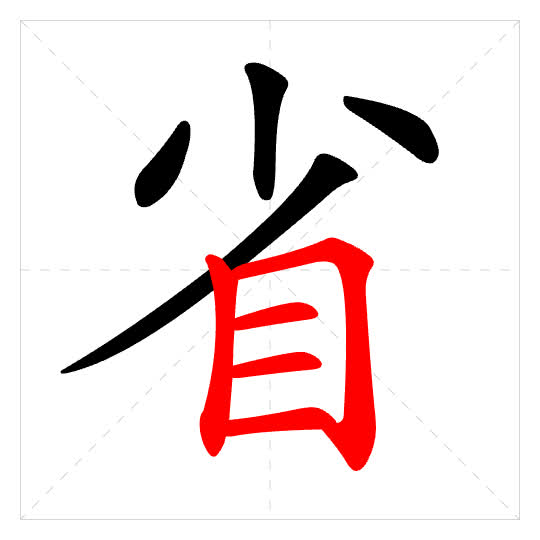
Basic Meaning
v
Often used in contexts related to money, effort, or resources. Opposite of 费.
to save; to economize; to be frugal
节约,耗费少,跟“费”相对。
Words:
省钱节省俭省省事省力
Antonyms:
Sentences:
- 这个新机器很省力,工作效率提高了。This new machine saves a lot of effort and improves work efficiency.
- 他每天走路去上班,这样可以省钱。He walks to work every day to save money.
v
Commonly used in writing or processes to indicate simplification or removal.
to omit; to leave out; to skip
免掉;减去。
Words:
省略省称省写省却蠲省
Synonyms:
免减
Sentences:
- 写邮件时,你可以省略一些不必要的细节。When writing an email, you can omit some unnecessary details.
- 为了省事,他直接买了成品。To save trouble, he directly bought the finished product.
n
A major administrative unit in China, directly under the central government.
province (administrative division)
行政区划单位,直属中央。
Words:
省会省界省份省城
Sentences:
- 这个省的面积很大,人口也很多。This province has a large area and a large population.
- 中国有很多省份,比如广东省和四川省。China has many provinces, such as Guangdong Province and Sichuan Province.
n
Refers specifically to the city where the provincial government is located.
provincial capital
指省会,省行政机关所在地。
Words:
进省抵省
Sentences:
- 他明天要去省城开会。He is going to the provincial capital for a meeting tomorrow.
- 我们计划下个月进省旅游。We plan to travel to the provincial capital next month.
n
Historical term; not commonly used in modern contexts except in historical or literary references.
ancient government department
古官署名。
Words:
尚书省中书省北省东省宫省
Sentences:
- 在古代,尚书省是重要的官署。In ancient times, the Shangshu Sheng was an important government department.
Writing & Component
Radical目
Structuretop_bottom
Stroke Count9
Strokes丨丿丶丿丨𠃍一一一