
的的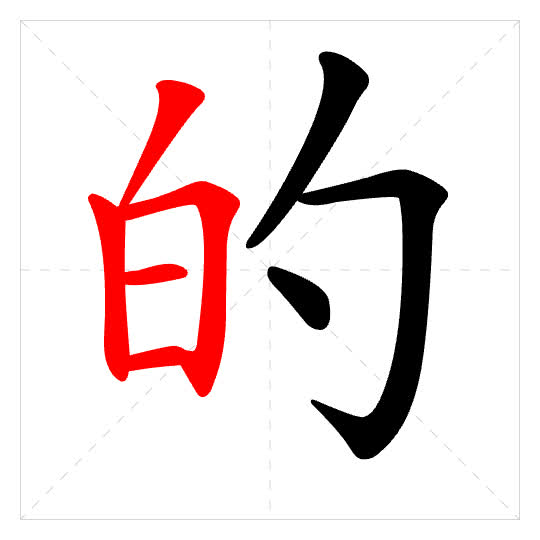
Basic Meaning
part
This is the most common structural particle '的'. It indicates that the preceding element modifies or possesses the following noun. Examples include descriptive, possessive, or associative relationships.
Used after an attribute/modifier to link it to the head noun it describes.
用在定语的后面。①定语和中心词之间是一般的修饰关系。②定语和中心词之间是领属关系。③定语是人名或人称代词,中心词是表示职务、身份或其他的名词,意思是这个人担任这个职务、取得这个身份或从事相关的活动。④中心词和前边的动词合起来表示一种动作,定语是动作的对象。
Sentences:
- 这是我的书。This is my book.
- 蓝色的天空很漂亮。The blue sky is very beautiful.
- 他是我们的老师。He is our teacher.
part
This structure means 'the one(s) that/who...', e.g., '吃的' means 'things to eat' or 'the edible ones'. It is commonly used with verbs or adjectives to refer to people or things.
Used to form a '的' structure without a head noun, functioning as a nominal phrase.
用来构成没有中心词的“的”字结构。①代替上文所说的人或物。②指某一种人或物。③表示某种情况、原因。④用跟主语相同的人称代词加“的”字做宾语,表示别的事跟这个人无关或这事儿跟别人无关。⑤“的”字前后用相同的动词、形容词等,连用这样的结构,表示有这样的,有那样的。
Words:
吃的喝的穿的红的卖菜的
Sentences:
- 这些水果都是吃的。These fruits are all for eating. / These are all edible.
- 我喜欢红的,不喜欢绿的。I like the red one(s), not the green one(s).
- 那边卖菜的是我邻居。The person selling vegetables over there is my neighbor.
part
This structure '是...的' is used to highlight specific details about a past event. For example, '我是昨天来的' (It was yesterday that I came).
Used between a verb and its object to emphasize the agent, time, manner, or place of the action (for events that have already occurred).
用在某些句子动词和宾语之间,强调这动作的施事者或时间、方式、地点等(用于已发生的事情)。
Sentences:
- 这本书是我昨天买的。It was yesterday that I bought this book.
- 他是坐飞机来的。It was by plane that he came.
part
This spoken usage adds emphasis to the stated circumstance. It's often used in exclamations.
A modal particle used after certain words or phrases at the beginning of a sentence to emphasize them.
语气助词。〈口〉用在句首某些词语的后面,强调这些词语表示的情况。
Sentences:
- 大晚上的,你怎么还不睡?It's so late at night, why aren't you sleeping yet?
part
This pattern is informal, e.g., '书啊本的摆了一桌子' (Books and things like that are scattered all over the table).
Used after two words or phrases of the same category to indicate 'and so on', 'things like that'.
用在两个同类的词或词组之后,表示“等等、之类”的意思。
Sentences:
- 他买了不少东西,水果啊零食的。He bought a lot of things, fruits, snacks, and such.
part
This particle adds a tone of certainty or confirmation, e.g., '他会来' (He will come) vs. '他会来的' (He will definitely come).
A modal particle used at the end of a sentence to strengthen an affirmative statement.
语气助词。用在句末,表示加强肯定。
Sentences:
- 别担心,他会成功的。Don't worry, he will succeed.
part
Similar to sense 8, but with a stronger implication that the situation is already realized or settled.
A modal particle used at the end of a sentence to indicate something is already the case and to strongly affirm it.
语气助词。用在句末,表示已然,并加强肯定。
Sentences:
- 我告诉他了,他知道了的。I told him, so he definitely knows (by now).
part
This is a colloquial listing pattern, e.g., '三百的五百的,花了不少钱' (Three hundred, five hundred, I spent quite a lot of money).
(Spoken) Used between two quantifiers to give examples or list items.
〈口〉用在两个数量词中间,表示列举。
Sentences:
- 超市里,十块的二十块的玩具很多。In the supermarket, there are many toys costing ten yuan, twenty yuan, and so on.
part
This is a general, softer affirming particle compared to sense 8 or 9.
Used at the end of a declarative sentence to indicate an affirmative tone.
用在陈述句的末尾,表示肯定的语气。
Sentences:
- 这些事他们都是知道的。They knew all of these things.
Writing & Component
Radical白
Structureleft_right
Stroke Count8
Strokes丿丨𠃍一一丿𠃌丶
Common Words
Related Articles
One unified blog surface for comparison and usage reading, grouped by the same headword.