
瘦瘦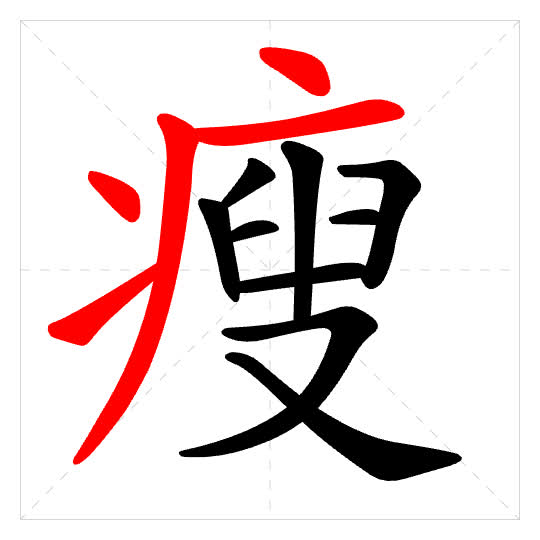
Basic Meaning
adj
Commonly used to describe people, animals, or meat. Can be neutral or slightly negative depending on context, e.g., '太瘦' (too thin) might imply unhealthy.
thin; lean
(人体)脂肪少;肉少(跟“胖、肥”相对)。(食用的肉)脂肪少(跟“肥”相对)。
Words:
面黄肌瘦肥瘦儿骨瘦如柴消瘦纤瘦
Antonyms:
Sentences:
- 我喜欢吃瘦的猪肉,不喜欢肥的。I like to eat lean pork, not fatty pork.
- 她为了健康,努力保持纤瘦的身材。For health, she works hard to maintain a slim figure.
adj
Used specifically for clothing and footwear to indicate fit, e.g., '这件衣服有点瘦' means 'This piece of clothing is a bit tight.'
tight; narrow
(衣服鞋袜等)窄小(跟“肥”相对)。
Words:
肥瘦
Antonyms:
肥
Sentences:
- 这条裤子太瘦了,我穿不进去。These pants are too tight; I can't get into them.
- 买鞋的时候要注意肥瘦,不然会不舒服。When buying shoes, pay attention to the width, or they might be uncomfortable.
adj
Primarily used in agricultural or descriptive contexts for land, e.g., '瘦田' refers to barren farmland.
barren; infertile
(地力)薄;不肥沃。
Words:
瘦田瘦地瘦土
Antonyms:
沃肥
Sentences:
- 这块地太瘦了,不适合种庄稼。This piece of land is too barren and not suitable for growing crops.
- 农民们正在改良那片瘦土。The farmers are improving that barren soil.
Writing & Component
Radical疒
Structuresemi_enclosed
Stroke Count14
Strokes丶一丿丶㇀丿丨一𠃍一一丨㇇㇏