
民民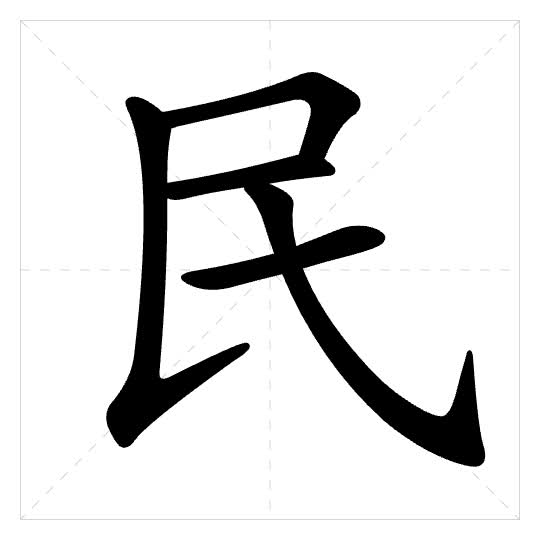
Basic Meaning
n
the people; common people; citizens; populace
人民;百姓。
Words:
公民国民人民民众草民
Sentences:
- 每一位公民都有投票的权利。Every citizen has the right to vote.
- 政府应该倾听人民的声音。The government should listen to the voice of the people.
- 这是为了广大民众的利益。This is for the benefit of the general public.
n
Often used in compound words to specify an ethnic or social group. Pay attention to historical and modern context for terms like 蛮民.
people (of a specific type or group); ethnic group member
指某种人。
Words:
汉民回民藏民苗民蛮民
Sentences:
- 他是一个回民。He is a Hui Muslim (a member of the Hui ethnic group).
- 藏民的传统服饰非常漂亮。The traditional clothing of the Tibetan people is very beautiful.
adj
Indicates something originating from or related to the common people's culture or daily life.
folk; popular; civilian; of the people
民间的。
Words:
民谣民俗民歌民风民谚
Sentences:
- 她喜欢收集中国的民歌。She likes collecting Chinese folk songs.
- 这个地方的民俗很有意思。The folk customs of this place are very interesting.
n
person engaged in a certain occupation; person of a certain status
从事某个职业的人;具有某种身份的人。
Words:
农民牧民渔民猎民商民
Sentences:
- 我爷爷以前是渔民。My grandfather used to be a fisherman.
- 许多农民现在也开始使用智能手机了。Many farmers are now also starting to use smartphones.
adj
Contrasts with official, government, or military (军) spheres.
civilian; non-military
非军人;非军事的。
Words:
民用民兵民航民船民警
Sentences:
- 这是一个民用机场。This is a civilian airport.
- 我这次坐的是民航飞机。I'm taking a civil aviation flight this time.
Writing & Component
Radical氏
Structuresingle
Stroke Count5
Strokes𠃍一𠄌一㇂