
易易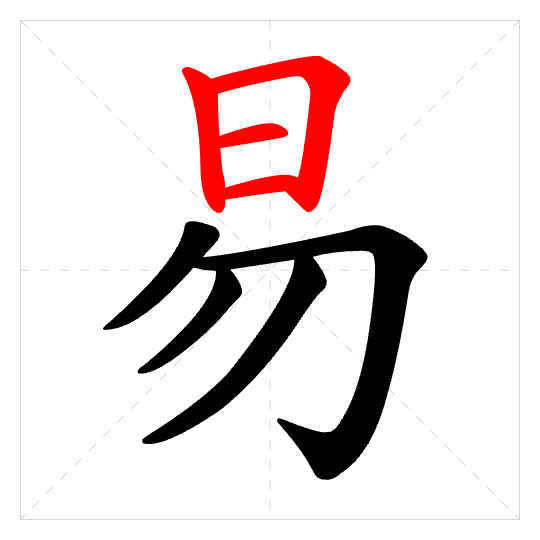
Basic Meaning
adj
Commonly used in daily life to describe tasks or situations that are simple to handle.
easy; not difficult (opposite of 'difficult')
做起来不费事的;容易(跟“难”相对)。
Words:
简易轻易易如反掌轻而易举显而易见来之不易
Antonyms:
Sentences:
- 学习中文不容易,但坚持练习会变得容易。Learning Chinese is not easy, but with consistent practice, it becomes simpler.
adj
Often describes a person's demeanor or attitude, as in 平易近人.
gentle; amiable; pleasant
平和;和悦。
Words:
平易近人
Sentences:
- 我们的老师很平易近人,学生们都喜欢他。Our teacher is very amiable and approachable; all the students like him.
v
Used in contexts involving alteration or modification, such as changing names or customs.
to change; to transform
改变;变换。
Words:
变易易名移风易俗改弦易辙不易之论
Sentences:
- 他决定易名,开始新的生活。He decided to change his name and start a new life.
- 这个城市正在努力移风易俗,推广环保习惯。This city is working hard to transform customs and promote eco-friendly habits.
v
Primarily used in economic or barter contexts, like in 贸易 or 交易.
to trade; to exchange
交易,交换。
Words:
贸易交易以物易物易货协定易子而教
Synonyms:
Sentences:
- 他们经常进行贸易,交换商品和服务。They often engage in trade, exchanging goods and services.
- 在古代,人们常用以物易物的方式交易。In ancient times, people often used barter as a way to trade.
adv
Functions as an adverb to indicate a high probability of something happening or changing.
likely; prone to change
发生某种变化的可能性大。
Sentences:
- 天气易变,出门最好带伞。The weather is likely to change, so it's best to bring an umbrella when going out.
- 这种材料易损坏,需要小心处理。This material is prone to damage and needs to be handled carefully.
n
A classical Chinese text, often mentioned in cultural or historical contexts.
refers to the 'Book of Changes' (I Ching)
指《周易》。
Sentences:
- 他正在研究《易》,学习古代He is studying the 'Book of Changes' to learn about ancient philosophy.
- 《易》是中国文化中的重要经The 'Book of Changes' is an important classic in Chinese culture.
Writing & Component
Radical日
Structuretop_bottom
Stroke Count8
Strokes丨𠃍一一丿𠃌丿丿