
戏戏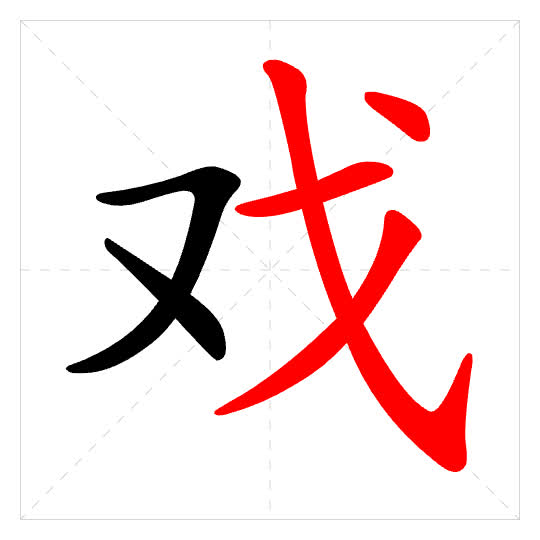
Basic Meaning
v
A literary or playful verb, often used in fixed compounds like 嬉戏, 儿戏. It is less common than the basic verb 玩 in everyday speech.
to play; to frolic.
玩耍;游戏。
Words:
Synonyms:
玩耍
Sentences:
- 孩子们在花园里快乐地嬉戏。The children are playing happily in the garden.
- 不要把重要的事情当儿戏。Don't treat important matters as a trifling game.
v
Often implies playful or light-hearted teasing, but 调戏 has a negative, harassing connotation. 戏言 means 'words said in jest'.
to tease; to joke; to make fun of.
嘲弄,开玩笑。
Words:
戏弄戏言戏谑调戏玩戏
Synonyms:
嘲谑
Sentences:
- 他只是戏言,你别生气。He was just joking, don't be angry.
- 同学们喜欢互相戏弄开玩笑。Classmates like to tease and joke with each other.
n
A common noun. Use measure words like 出, 场, 台, 部. 戏 often refers to traditional Chinese opera when specified (e.g., 京戏).
drama; play; show; performance (including opera, acrobatics, etc.).
(出,场,台,部)用语言、动作、表情、歌舞等表达思想感情的一种表演;也指杂技。
Words:
马戏京戏地方戏木偶戏草台戏
Sentences:
- 周末我们一起去看了一场马戏表演。We went to see a circus performance together over the weekend.
- 我奶奶最喜欢听地方戏。My grandma loves listening to local opera the most.
- 这部戏的演员演得非常好。The actors in this play performed very well.
Writing & Component
Radical戈
Structureleft_right
Stroke Count6
Strokes㇇丶一㇂丿丶