
恐恐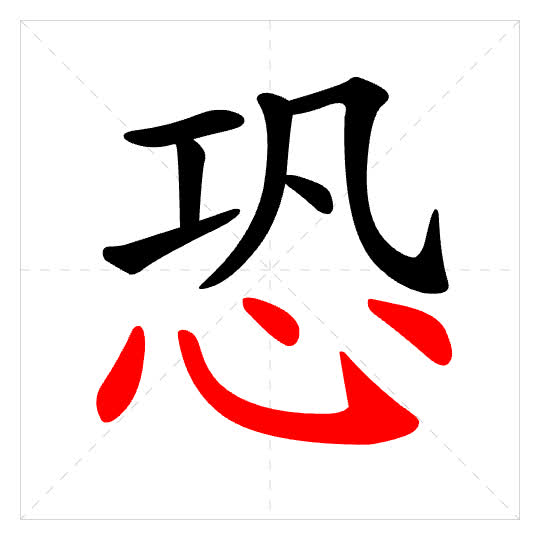
Basic Meaning
v
Often appears in formal or literary contexts.
to fear; to be afraid
害怕;畏惧。
Words:
恐慌惊恐有恃无恐诚惶诚恐惶恐
Synonyms:
Sentences:
- 深夜独行时,他心中不免有些恐惧When walking alone late at night, he inevitably felt some fear in his heart.
- 在突如其来的灾难面前,人们陷入了恐慌In the face of a sudden disaster, people fell into panic.
v
Used as part of verbs like 恐吓.
to frighten; to terrify
使害怕。
Words:
恐吓
Sentences:
- 不法分子试图通过恐吓来获取钱财Lawless individuals attempted to obtain money through intimidation.
- 这部电影的场景很恐怖The scenes in this movie are very terrifying.
adv
Commonly used as 恐怕, expressing polite concern or doubt.
probably; might (indicating conjecture or concern)
恐怕,表示疑虑不定或推测,有“大概”的意思。
Words:
恐不可信
Sentences:
- 他恐怕今天不能按时到达He probably cannot arrive on time today.
- 天这么阴,恐怕要下雨了The sky is so gloomy; it might rain.
Writing & Component
Radical心
Structuretop_bottom
Stroke Count10
Strokes一丨㇀丿㇈丶丶㇂丶丶