
幸幸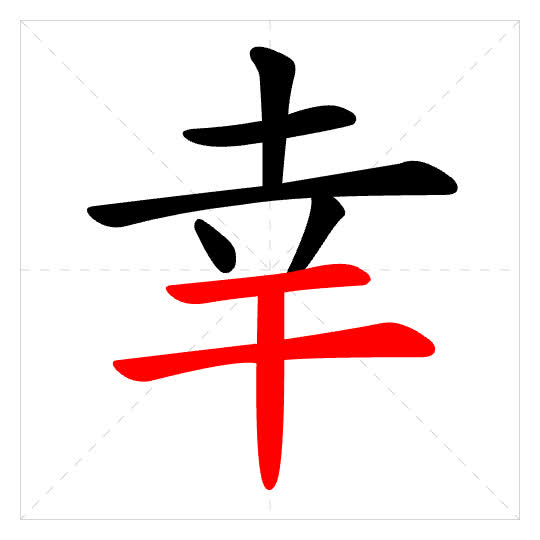
Basic Meaning
adj
Often used in words related to happiness and good fortune.
happy; fortunate; lucky
幸福;幸运。
Antonyms:
恶灾
Sentences:
- 祝你生活幸福。I wish you a happy life.
- 能认识你真是三生有幸。It's a great honor to meet you.
adj
Often implies feeling happiness about a favorable outcome.
glad; rejoicing (over one's own or another's good fortune)
认为幸福而高兴。
Words:
庆幸欣幸幸灾乐祸
Sentences:
- 我很庆幸自己带了伞。I'm very glad that I brought an umbrella.
adv
Used in formal or classical written Chinese to express a polite hope or request.
〈literary〉to hope; to wish
〈书〉望;希望。
Words:
幸勿推却
Sentences:
- 我诚挚地邀请您担任我们活动的嘉宾,幸勿推却。I cordially invite you to be a guest at our event; please do not decline.
adj
Often used as an adverb (e.g., 幸亏, 幸而) to indicate something happened luckily. As an adjective, it describes a state of being fortunate after an event.
fortunate (in escaping harm or achieving success unexpectedly); luckily
意外地得到成功或免去灾害。
Words:
幸存幸免幸亏幸而
Sentences:
- 这次事故中,他幸免于难。He luckily survived the accident.
- 幸亏你提醒我,不然我就迟到了。Luckily you reminded me, otherwise I would have been late.
v
Obsolete usage related to imperial courts.
(archaic) to gain the favor or affection (of a monarch)
旧指得到帝王的宠爱。
Words:
得幸宠幸幸臣
Sentences:
- 在古代,得幸于君王是件大事。In ancient times, gaining the emperor's favor was a major event.
v
Obsolete usage specific to the movements of an emperor.
(archaic) (of an emperor) to visit a place; to make an imperial visit
旧称帝王到某处去。
Words:
巡幸临幸
Sentences:
- 乾隆皇帝曾多次巡幸江南。Emperor Qianlong made multiple imperial tours to the Jiangnan region.
Writing & Component
Radical干
Structuretop_bottom
Stroke Count8
Strokes一丨一丶丿一一丨