
季季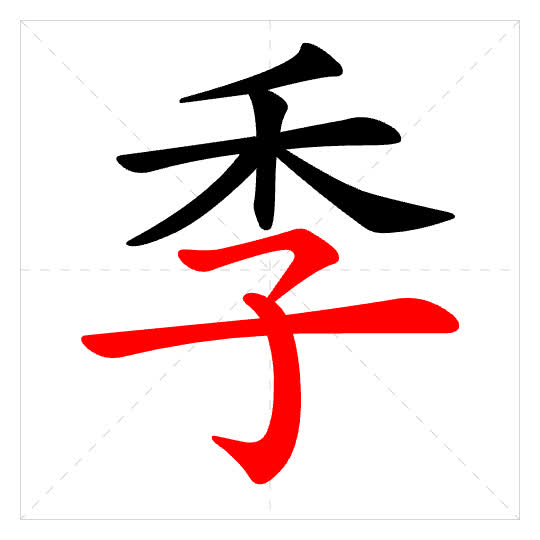
Basic Meaning
n
在传统的兄弟排行中,顺序为伯、仲、叔、季,其中季指最小的兄弟。这是一个文言用法,在现代汉语中主要用于亲属称谓词中,如“季父”(小叔父)。
the youngest (among male siblings).
兄弟排行常用伯、仲、叔、季做次序,季是最小的。
Words:
季弟季父叔季伯仲叔季
Sentences:
- 在伯仲叔季的排行里,“季”是最小In the traditional ranking system of Bo, Zhong, Shu, Ji, 'Ji' is the youngest.
n
用于指一个时代或时期的末期,是一个比较文雅的书面语。例如“清季”指清朝末年,“季世”指末世。
the end of a period, the last part of an era.
指一个时期的末了。
Words:
清季季世明季明季清初季叶
Sentences:
- 这本书记录了明季清初的社会变化。This book records the social changes during the late Ming and early Qing dynasties.
- 季世之君,常常不理朝政。The rulers at the end of an era were often negligent in state affairs.
n
season (as in the four seasons: spring, summer, autumn, winter), a period of three consecutive months.
一年分春、夏、秋、冬四季,三个月为一季。
Words:
春季秋季冬季夏季季节
Sentences:
- 这个季度,公司将发布新的产品。The company will launch new products this quarter.
n
指具有某种特点的时期或时节,如“雨季”、“旅游旺季”、“比赛季”。
season; period of a specific type or activity.
季节。
Words:
雨季淡季花季旺季旱季
Sentences:
- 南方的雨季现在已经开始了。The rainy season in the south has already begun.
- 冬天是滑雪的旺季。Winter is the peak season for skiing.
Writing & Component
Radical子
Structuretop_bottom
Stroke Count8
Strokes丿一丨丿㇏㇇亅一