
娘娘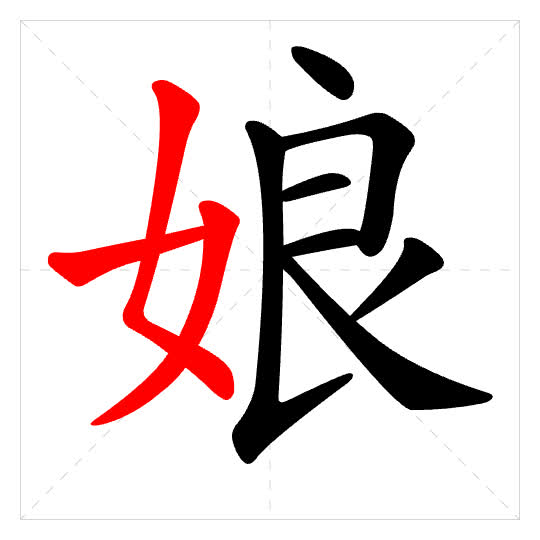
Basic Meaning
n
A common and intimate term for 'mother', typically used in spoken, informal contexts. Often appears in phrases like 爹娘 (dad and mom) or 娘家 (mother'娘家's family, referring to a married woman's natal family).
(colloquial) mother; mom.
〈口〉母亲。
Words:
爹娘娘家
Sentences:
- 每逢过年,他都特别想念在老家的爹娘。Every Chinese New Year, he especially misses his mom and dad back in his hometown.
- 周末她打算带着孩子回娘家看看。This weekend, she plans to take her child back to her mother's family home for a visit.
n
Used as a polite form of address. Often preceded by a modifier like 大, 婶, 姨, or 师 to indicate a specific familial or social relationship.
A respectful term for an aunt or an older, senior married woman (of one's parents' generation).
称长(zhǎng)一辈或年长的已婚妇女。
Words:
大娘婶娘姨娘师娘
Sentences:
- 邻居王大娘对我非常照顾。Our neighbor, Auntie Wang, takes very good care of me.
- 我去请教了隔壁的婶娘,她做饭特别好吃。I went to ask the next-door auntie for advice; she cooks very well.
n
When meaning 'young woman', it often appears in specific words like 新娘 (bride) or 渔娘 (fisherwoman). When meaning 'girl/maiden', it's primarily used in the word 姑娘 (girl; young lady).
① A young woman. ② A maiden; a girl.
①年轻妇女。②少女。
Words:
姑娘新娘娘子渔娘娇娘
Sentences:
- 隔壁的姑娘小提琴拉得真好。The girl next door plays the violin really well.
- 那位渔娘划着小船,平静地穿行在荷花之间。That fisherwoman rowed her small boat, gliding peacefully among the lotus flowers.
- 新娘今天穿着白色的婚纱,非常漂亮。The bride is very beautiful today, wearing a white wedding dress.
Writing & Component
Radical女
Structureleft_right
Stroke Count10
Strokes𡿨丿一丶𠃍一一𠄌丿㇏