
失失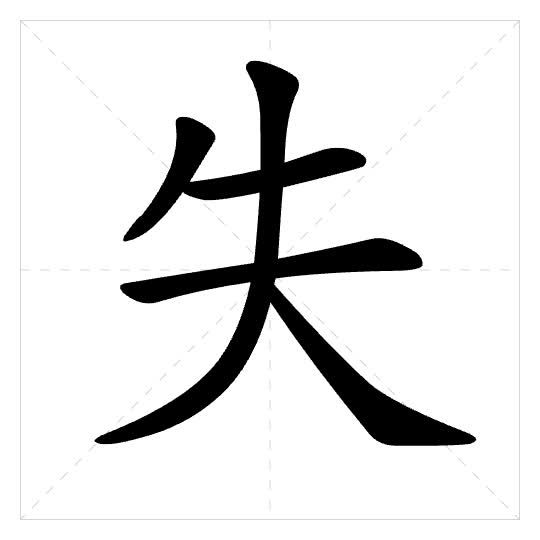
Basic Meaning
v
Commonly used for tangible and intangible things. Opposite concept is expressed by 得.
to lose; to be deprived of (as opposed to 'to gain').
失掉;丢掉(跟“得”相对)。
Words:
遗失丢失失血坐失良机机不可失
Synonyms:
Antonyms:
Sentences:
- 他昨天不小心遗失了手机。He accidentally lost his phone yesterday.
- 这场事故导致他失血过多。This accident caused him to lose too much blood.
v
Often used for people, animals, or objects whose whereabouts are unknown.
to be lost; to become missing; cannot find.
找不着。
Words:
失踪迷失迷失方向失群之雁失群孤雁
Sentences:
- 他的猫已经失踪三天了。His cat has been missing for three days.
- 在树林里,我们容易迷失方向。In the forest, we can easily get lost.
v
Often used in the context of failing to keep one's word (失信), appointment (失约), or professional responsibility (失职).
to violate; to break (a promise, trust, or duty).
违背;背弃。
Words:
失信失约失职失实失言
Synonyms:
违弃
Antonyms:
守
Sentences:
- 如果你迟到,就是对他失信了。If you are late, you are breaking your promise to him.
- 他今天临时有急事,不得不失约。He had an urgent matter come up today and had to break the appointment.
v
Implies failing to take action at the right time, often with a sense of regret.
to miss (an opportunity); to fail to grasp (a moment).
错过;没有把握住。
Words:
失手失足失言失火失声痛哭
Sentences:
- 他很遗憾上次考试失手了。He really regrets messing up on the last exam.
v
Describes a state of unfulfilled expectations, often resulting in disappointment.
to fail to achieve a purpose or wish.
没有达到目的。
Words:
失望失意失策大失所望万分失望
Sentences:
- 他这次的演讲让大家很失望。His speech this time left everyone very disappointed.
- 比赛的结果让他万分失意。The result of the match left him utterly unfulfilled and disappointed.
v
Describes an involuntary change in one's usual behavior or appearance due to a strong emotion or shock.
to lose (one's normal state or composure).
改变(常态)。
Words:
失声失色失神失态大惊失色
Sentences:
- 看到恐怖的场景,他吓得大惊失色。Seeing the horrific scene, he was so scared that his face changed color.
Writing & Component
Radical大
Structuresingle
Stroke Count5
Strokes丿一一丿㇏