
告告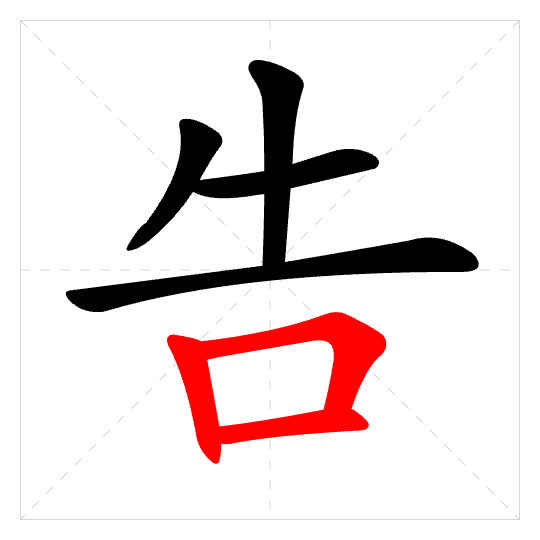
Basic Meaning
v
A very common verb for conveying information. Often used in compounds like 告诉 and 广告.
to tell; to inform; to announce
把事情向别人述说、介绍或宣布。
Synonyms:
述陈叙
Antonyms:
瞒隐藏
Sentences:
- 请告诉我你的名字。Please tell me your name.
v
Specifically used in legal or formal complaint scenarios. Compounds like 告状 are colloquial for 'to tell on someone' or 'to sue'.
to sue; to accuse; to file a complaint (in a legal context)
向国家行政司法机关检举、控诉。
Words:
告状控告告发上告诬告
Synonyms:
控诉
Sentences:
- 他决定去法院告状。He decided to go to court to sue.
- 他们控告他偷东西。They accused him of stealing.
v
Often used in fixed phrases for making formal requests, such as 告假 (to ask for leave).
to request (for something); to ask for
(为某事)请求。
Words:
告假告贷告饶
Synonyms:
求祈
Sentences:
- 我想向老师告假一天。I want to ask the teacher for a day off.
v
Used to show a state or intention, often in formal or set expressions like 告别 (to say goodbye).
to express; to indicate; to bid (as in farewell)
表明。
Words:
告别自告奋勇告辞告慰告示
Synonyms:
Sentences:
- 他在机场和朋友们告别。He said goodbye to his friends at the airport.
- 他自告奋勇去帮助老人。He volunteered to help the elderly.
v
Indicates the announcement of a result or situation, often in fixed phrases like 大功告成 (to accomplish successfully).
to announce (the completion or occurrence of something); to declare
宣布或表示某种情况的出现。
Words:
告成告急大功告成告罄告一段落
Sentences:
- 这个项目终于大功告成了。This project is finally successfully completed.
- 我们的食物快告罄了。Our food is almost exhausted.
n
Refers to the published document itself. Common in compounds like 广告 (advertisement) and 公告 (public notice).
notice; announcement; declaration (a document)
机关、团体或个人发表的声明、启事、文件等。
Words:
Sentences:
- 墙上贴着一张公告。There is a notice posted on the wall.
- 这个广告很有趣。This advertisement is very interesting.
n
Specifically refers to the plaintiff or defendant in a legal case. Almost always used in 原告 (plaintiff) and 被告 (defendant).
party in a lawsuit (litigator)
诉讼的双方。
Words:
原告被告
Sentences:
- 原告和被告都出席了。Both the plaintiff and the defendant were present.
- 被告的律师很有经验。The defendant's lawyer is very experienced.
Writing & Component
Radical口
Structuretop_bottom
Stroke Count7
Strokes丿一丨一丨𠃍一