
势势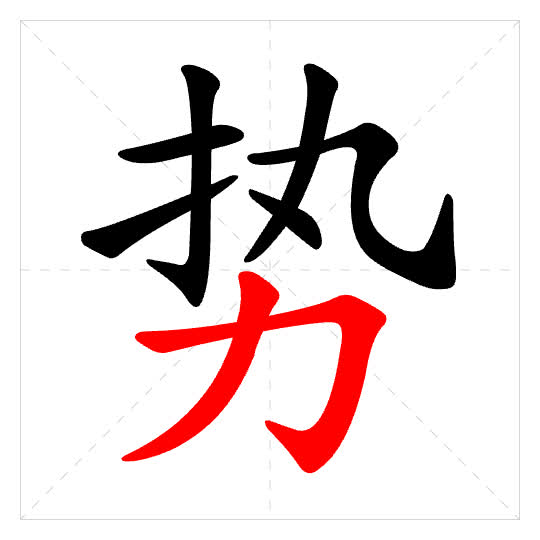
Basic Meaning
n
This sense often appears in compound words. 地势 refers to terrain, 姿势 to posture, 局势 to the overall situation.
state; appearance; situation. Can refer to: 1) Natural phenomena or topography. 2) Posture or gesture of an action. 3) The situation or state of affairs in political, military, or other social activities.
表现出来的情况,样子。①属于自然界的;自然界的现象或形势。②属于动作的;姿态。③属于政治、军事或其他社会活动方面的状况或情势。
Words:
地势山势姿势手势局势
Sentences:
- 这里的山势很险峻,不适合新手去爬。The terrain of the mountains here is very steep and not suitable for beginners to climb.
- 他跳舞的姿势非常优美。His dancing posture is very graceful.
- 我们公司最近的市场局势很好。Our company's market situation is very good lately.
n
Always appears in compounds or fixed phrases when used alone. 势力 means power/influence, and 权势 combines power and status.
power; influence; strength.
权力;力量。
Words:
势力势均力敌有钱有势仗势欺人权势
Sentences:
- 他在这个行业里很有势力。He has a lot of influence in this industry.
- 这两个球队势均力敌,比赛很精彩。These two teams are equally matched, making the game very exciting.
n
Specific veterinary/zoological term. In modern common usage, it's almost exclusively seen in the fixed term 去势 (neutering/castration).
The reproductive organs of a male animal.
雄性动物的生殖器。
Words:
去势
Sentences:
- 给宠物狗去势是一个常见的做法。Neutering a pet dog is a common practice.
Writing & Component
Radical力
Structuretop_bottom
Stroke Count8
Strokes一亅㇀丿㇈丶𠃌丿