
作作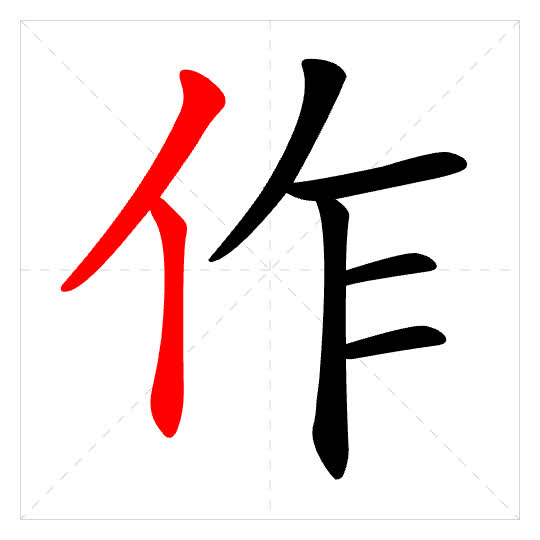
Basic Meaning
v
Often used in formal or literary contexts, e.g., 深耕细作 (intensive farming).
to work; to labor; to make; to manufacture.
劳作,制造。
Words:
深耕细作操作劳作
Synonyms:
Antonyms:
Sentences:
- 农民们在田里辛勤劳作The farmers work hard in the fields.
- 这个工厂专门操作精密仪器This factory specializes in operating precision instruments.
v
Used to describe the start or emergence of an action or state, often in set phrases like 振作 (to brace up) or 一鼓作气 (to press on without letup).
to rise; to arise; to stir up.
起,兴起。
Words:
振作锣鼓大作日出而作一鼓作气兴风作浪见机而作
Sentences:
- 听到好消息,他立刻振作起来Hearing the good news, he immediately perked up.
- 比赛开始前,教练鼓励大家一鼓作气Before the game started, the coach encouraged everyone to press on without letup.
v
Specifically refers to creative or artistic production, such as 作曲 (compose music) or 作诗 (write poetry).
to write; to compose; to create (art, music, literature).
写作;创作。
Words:
吟诗作赋作曲作诗述而不作作词作画
Synonyms:
赋著仕撰缀
Sentences:
- 他喜欢在晚上作诗He likes to write poetry in the evening.
- 这位作曲家为电影作了曲This composer composed music for the film.
v
Used to indicate pretending or putting on an act, as in 装模作样 (to put on an act).
to pretend; to feign.
装作。
Words:
作态装模作样
Synonyms:
Sentences:
- 他装模作样地看书,其实在玩手机He pretended to read a book, but actually he was playing with his phone.
v
Indicates treating something as something else, often in formal or legal contexts, e.g., 作废 (to become invalid).
to regard as; to take as; to serve as.
当成;作为。
Words:
作保作废认贼作父作数作则
Sentences:
- 这张票已经过期,作废了This ticket has expired and is no longer valid.
- 我以他作榜样,努力学习I take him as my role model and study hard.
v
A broad sense for engaging in actions, often in fixed phrases like 合作 (cooperate) or 作弊 (cheat).
to do; to engage in (an activity).
做某事;从事某种活动。
Words:
作孽自作自受合作作弊为非作歹作案
Sentences:
- 学生们合作完成了一个项目The students cooperated to complete a project.
- 考试时作弊是不对的Cheating during exams is wrong.
v
Used for physical or emotional sensations, e.g., 作痛 (to ache) or 作呕 (to feel nauseated).
to occur; to appear; to feel (a sensation).
发生;现出。
Words:
作呕作痛愤然作色令人作呕周身作痛
Sentences:
- 闻到奇怪的味道,他有点作呕Smelling the strange odor, he felt a bit nauseated.
- 我的伤口还在作痛My wound is still aching.
n
Refers to a created product, especially in artistic or literary contexts. Often used in compounds like 作品 (work) or 佳作 (excellent work).
work; piece (of art, writing, etc.).
作品。
Words:
Sentences:
- 这是他的最新作品This is his latest work.
- 那幅画是一件杰作That painting is a masterpiece.
Writing & Component
Radical亻
Structureleft_right
Stroke Count7
Strokes丿丨丿一丨一一