
颜颜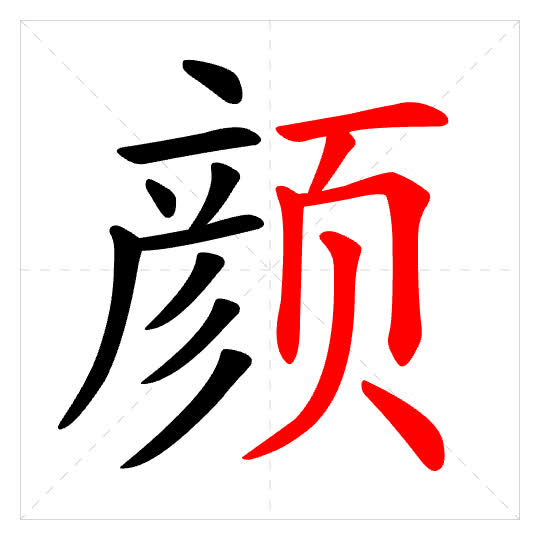
Basic Meaning
n
Often appears in literary or somewhat formal contexts, but is common in words related to appearance or expression, like 容颜, 笑颜. The idiom 和颜悦色 is very common and means 'to have a kind and pleasant countenance'.
face; countenance; facial expression.
面容;脸上的表情。
Words:
容颜和颜悦色养颜笑颜开颜
Synonyms:
Sentences:
- 他露出了开心的笑颜。He showed a happy, smiling face.
- 好的护肤品可以帮助养颜。Good skincare products can help nourish the skin and improve one's complexion.
n
This sense is primarily used in specific compounds like 颜料 (paint, pigment) and 五颜六色 (all the colors of the rainbow, multicolored). On its own, it's archaic for 'color'; modern standard word is 颜色.
color; pigment.
颜色,色彩。
Words:
Sentences:
- 我需要买一些新的颜料来画画。I need to buy some new paint to draw.
- 孩子的房间里装饰得五颜六色。The child's room is decorated in all the colors of the rainbow.
n
Refers to social standing, dignity, or 'saving face'. Often used in negative contexts (e.g., 无颜见人 'have no face to see someone', 厚颜无耻 'shameless') or to describe a loss of dignity (颜面扫地).
face; honor; reputation.
脸面;体面;面子。
Words:
厚颜无耻无颜见人颜面颜面扫地颜弱
Sentences:
- 做了这样的事,他真是无颜见人。After doing such a thing, he really has no face to see anyone.
- 这次失败让他在朋友面前颜面扫地。This failure caused him to lose all face in front of his friends.
Writing & Component
Radical页
Structureleft_right
Stroke Count15
Strokes丶一丶丿一丿丿丿丿一丿丨𠃍丿丶