
须须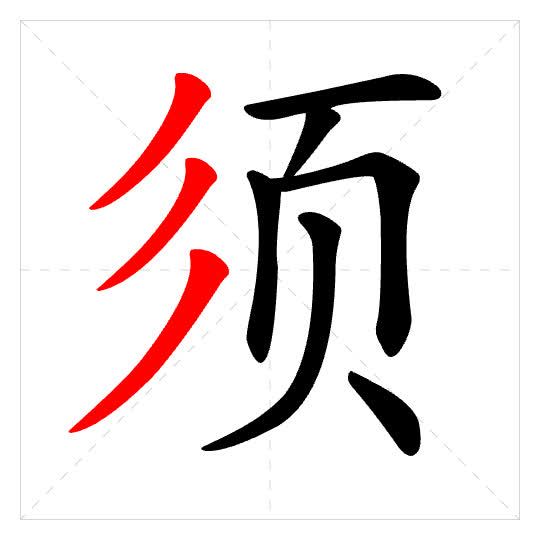
Basic Meaning
v
Used as an auxiliary verb to indicate necessity or obligation. Often paired with other characters like 务, 必, or 无. 须要 and 需要 are different; the former emphasizes necessity, while the latter expresses a need (e.g., for an object or action).
must; to need to; to have to
助动词。必须;必要。
Words:
Sentences:
- 开车前务须系好安全带。You must fasten your seatbelt before driving.
- 入场须知贴在墙上。The must-read notices for entry are posted on the wall.
- 无须担心,问题已经解决了。There's no need to worry; the problem is already solved.
n
Refers specifically to the hair on a man's face, particularly the chin. Can be used in literary or formal contexts (e.g., 须发, 须眉).
beard; facial hair
原来指长在下巴上的胡子,后来泛指胡须。
Words:
须发须眉胡须留须剃须
Sentences:
- 爷爷的胡须又长又白。Grandpa's beard is long and white.
- 他决定留须,显得更成熟。He decided to grow a beard to look more mature.
n
Refers to thin, thread-like appendages on plants (e.g., roots) or animals (e.g., antennae).
whisker-like thing; awn; fiber
像胡须的东西。
Words:
触须花须须根鼠须根须
Sentences:
- 小猫的触须很灵敏。The kitten's whiskers are very sensitive.
- 玉米的花须在风中飘动。The corn silk (tassels) sway in the wind.
Writing & Component
Radical页
Structureleft_right
Stroke Count9
Strokes丿丿丿一丿丨𠃍丿丶