
靠靠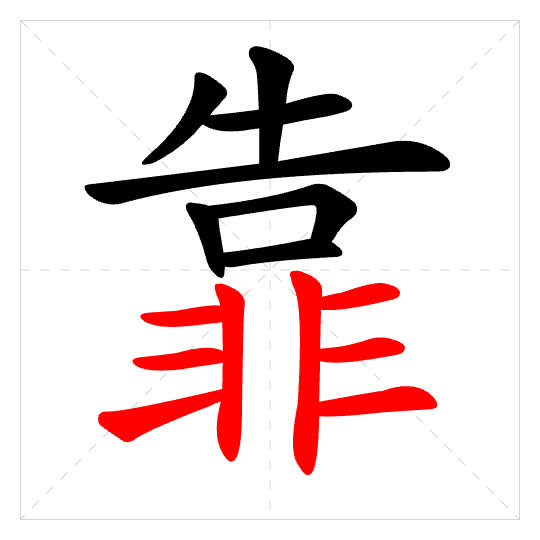
Basic Meaning
v
Used for physical proximity or objects/vehicles coming close to something, like a shore or another object.
to lean against; to be near to; to draw close to.
倚着;挨近。
Words:
背靠背靠岸停靠靠拢靠近
Synonyms:
挨
Sentences:
- 船慢慢靠岸了。The boat slowly drew close to the shore.
- 大家请向中间靠拢。Everyone, please move closer to the center.
Specifically describes the physical act of using someone or something to support your body. Often used with 着.
to rest one's weight on; to lean on (for support).
(人)坐着或站着时,让身体一部分重量由别人或物体支持着;倚靠。
Words:
倚靠靠垫靠枕靠墙
Sentences:
- 他坐车时喜欢靠着窗。He likes to lean against the window when he's in the car.
- 我累了,可以靠着你休息一下吗?I'm tired, can I rest by leaning on you for a moment?
v
Commonly used in the adjective forms 可靠 (reliable) or 靠得住 (trustworthy) to describe a person or thing.
to be trustworthy; to be reliable.
信赖。
Words:
可靠靠得住牢靠
Sentences:
- 他是一个非常可靠的朋友。He is a very reliable friend.
- 这个消息靠得住吗?Is this piece of information trustworthy?
v
Describes dependence on someone or something for support, help, or survival.
to rely on; to depend on.
依靠,依赖。
Words:
投靠依靠靠山
Sentences:
- 很多年轻人现在还需要依靠父母。Many young people still need to rely on their parents.
- 在公司里,他有自己的靠山。In the company, he has his own backer (someone to depend on for support).
Writing & Component
Radical非
Structuretop_bottom
Stroke Count15
Strokes丿一丨一丨𠃍一丨一一一丨一一一