
量量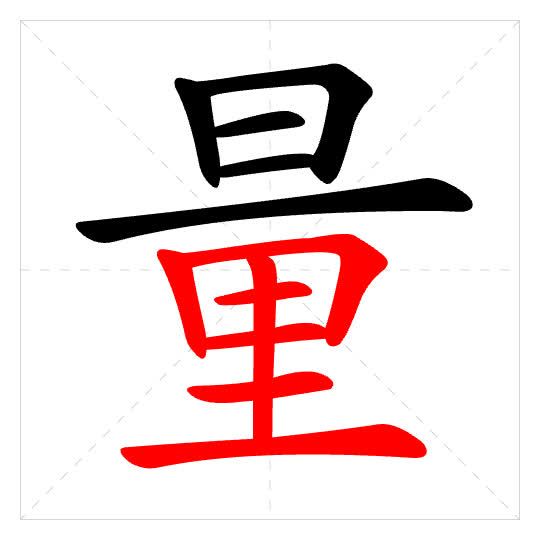
Basic Meaning
n
This sense refers to ancient measurement tools or units, as seen in the term 度量衡.
(archaic) vessel or unit for measuring quantity (e.g., dou, sheng).
古代指测量东西多少的器物,如斗、升等。
Words:
度量衡
Sentences:
- 古代的度量衡制度中,'斗'和'升'都是重要In the ancient system of measurement, 'dou' and 'sheng' were important measuring vessels.
n
Often found in words describing personal capacity or tolerance, like 饭量, 胆量, 酒量.
limit of tolerance or capacity.
能经受或容纳的限度。
Words:
饭量胆量酒量气量力量
Sentences:
- 他的饭量很大,一顿能吃三碗米饭。His capacity for food is large; he can eat three bowls of rice in one meal.
- 她的胆量过人,敢一个人去探险。Her courage is exceptional; she dares to explore alone.
n
Commonly used in compound nouns describing measurable quantities, e.g., 产量, 数量.
quantity; amount; number.
数量,数的多少。
Words:
产量数量降雨量信息量重量
Sentences:
- 今年的小麦产量比去年提高了。This year's wheat output has increased compared to last year.
- 这条新闻的信息量很大,需要仔细阅读。This news article contains a large amount of information and requires careful reading.
v
This sense often appears in idiomatic phrases like 量体裁衣, 量力而行, implying careful consideration.
to assess; to estimate.
衡量;估计。
Words:
量刑量体裁衣量力而行量力而为量入为出
Sentences:
- 我们应该量体裁衣,根据实际情况制定计划。We should tailor the plan to the actual situation, just like tailoring clothes to the body.
- 做决定前,最好先量力而行。Before making a decision, it's best first to act according to one's capability.
Writing & Component
Radical里
Structuretop_bottom
Stroke Count12
Strokes丨𠃍一一一丨𠃍一一丨一一