
词词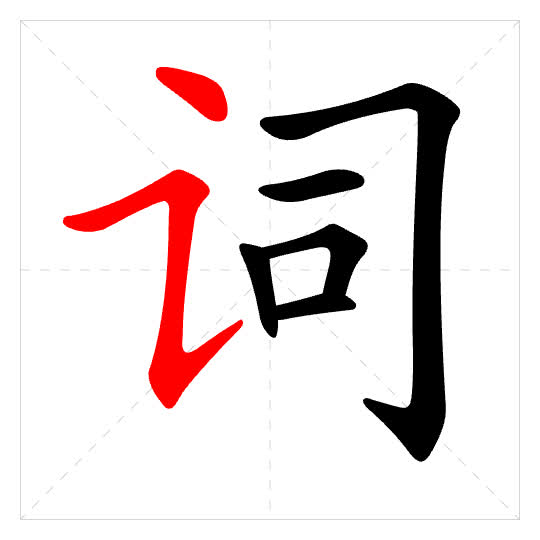
Basic Meaning
n
In linguistics, a 词 is a morpheme that can stand alone in a sentence, such as nouns, verbs, and adjectives. A 词组 is a group of words, typically longer than a single 词.
word (as the smallest independent unit in a language)
在句子里能自由运用的最小的语言单位,如“人、跑、甜、他、而且”等。
Words:
名词形容词词性词组词义
Sentences:
- “美丽”是一个形容词"Beautiful" is an adjective.
- 学习一个生词时,要先明白它的词义。When learning a new word, you should first understand its meaning.
n
A specific poetic genre with fixed tonal patterns and line lengths, originally written to be sung to existing tunes. Often referenced with 唐诗宋词. Terms like 词牌名 refer to the tune pattern's name.
a form of classical Chinese poetry, 'Ci' (lyric poetry from the Song Dynasty)
一种韵文形式,由五言诗、七言诗和民间歌谣发展而成,起于唐代,盛于宋代。原是配乐歌唱的一种诗体,句的长短随着歌调而改变,因此又叫作长短句。有小令和慢词两种,一般分上下两阕。
Words:
歌词唐诗宋词诗词宋词词牌名
Sentences:
- 她最喜欢背诵宋词,比如苏轼的作品。She likes reciting Song Dynasty 'Ci' poetry the most, such as the works of Su Shi.
- 这首词的词牌名是“水调歌头”The tune pattern name of this 'Ci' poem is "Prelude to Water Melody".
n
Often refers specifically to the text meant to be sung (唱词) or performed. The colloquial expression 没词了 means 'to be at a loss for words'.
lyrics; the sung words in a song or opera; lines in a speech or play
(~儿)说话、文章、诗歌、戏剧中的语句,特指歌曲、戏曲中配合曲调唱的语句部分。
Words:
戏词词不达意唱词作词没词了
Sentences:
- 这首歌的歌词写得非常感人。The lyrics of this song are written in a very touching way.
- 他在舞台上忘词了,有点尴尬。He forgot his lines on stage, which was a bit awkward.
n
A more general sense for words as spoken or written statements, often used in formal or literary contexts. For example, 供词 means 'a confession', and 台词 means 'stage lines'.
words; speech; statement
话;语句。
Words:
Sentences:
- 法官要求他提供详细的供词。The judge demanded he give a detailed confession.
- 他说话总是义正词严,很有说服力。He always speaks in a just and forceful manner, which is very persuasive.
Writing & Component
Radical讠
Structureleft_right
Stroke Count7
Strokes丶㇊𠃌一丨𠃍一