
许许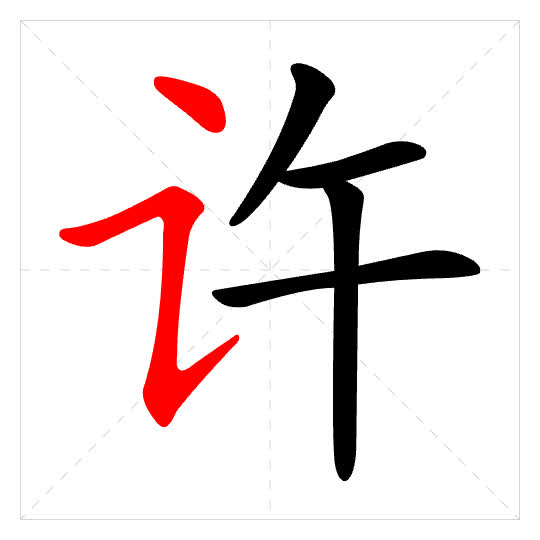
Basic Meaning
v
Often used in formal or official contexts, e.g., 许可 (permission). Can be negated as 不许 (not allowed).
to permit; to allow; to approve
应允,认可。
Words:
许可准许特许默许不许
Antonyms:
禁
Sentences:
- 老师许可我们提前下课The teacher allowed us to leave class early.
- 这个地方不许吸烟Smoking is not allowed in this place.
v
Common in literary or formal praise, e.g., 赞许 (to praise).
to praise; to commend; to acknowledge merits
称赞,承认其优点。
Words:
赞许推许许为佳作称许
Sentences:
- 大家都赞许他的努力Everyone praised his hard work.
- 老师称许她的作文写得好The teacher commended her for writing a good essay.
part
A classical Chinese particle used to indicate an approximate quantity, e.g., 五时许 (around five o'clock).
approximately; about (a number)
〈书〉结构助词。表示大概的数。
Words:
五时许百许人些许少许
Sentences:
- 会议在下午三时许开始The meeting started around three o'clock in the afternoon.
- 这个房间能容纳百许人This room can hold about a hundred people.
adv
Used as an adverb to express uncertainty, e.g., 也许 (maybe).
maybe; perhaps; possibly
可能;或者。
Words:
也许或许
Sentences:
- 也许明天会下雨Maybe it will rain tomorrow.
- 他或许已经回家了Perhaps he has already gone home.
v
Refers to traditional parental arrangement of a daughter's engagement, e.g., 许配 (to betroth).
to betroth; to arrange a marriage (for a daughter)
许配。家长做主,女儿与他人订婚。
Words:
以身相许以身许国许配
Sentences:
- 在古代,女儿常被许配给贵族In ancient times, daughters were often betrothed to nobles.
- 她以身相许,嫁给了救命恩人She betrothed herself and married her savior.
v
Often used in contexts like making vows or commitments, e.g., 许愿 (to make a wish or promise).
to promise (to give something or do something)
答应(送人东西或给人做事)。
Words:
许愿以身许国
Sentences:
- 他许愿要成为一名医生He promised to become a doctor.
- 她许下诺言要帮助朋友She made a promise to help her friend.
Writing & Component
Radical讠
Structureleft_right
Stroke Count6
Strokes丶㇊丿一一丨