
让让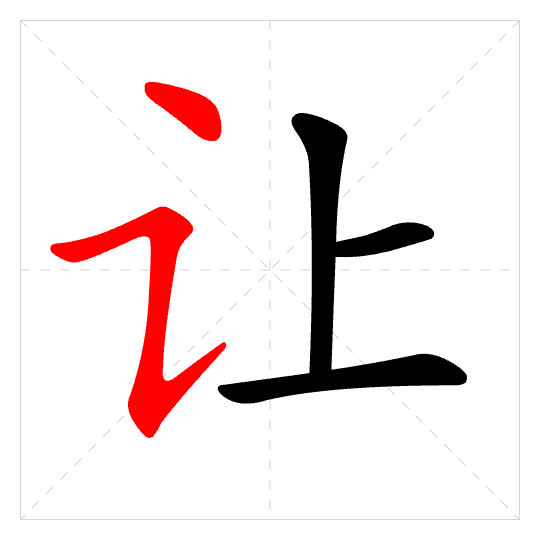
Basic Meaning
v
often used in contexts of politeness, compromise, or social etiquette
to yield or give way to others, especially in situations where both parties need something, offering benefits or convenience to them
在双方都需要的情况下,把好处或方便给别人。
Words:
让步礼让谦让退让让座
Antonyms:
争抢
Sentences:
- 为了达成协议,双方都需要做出让步。To reach an agreement, both sides need to make concessions.
- 在排队时,他主动让座给老人。While queuing, he proactively gave up his seat to the elderly.
v
commonly used in social settings like meals or gatherings
to invite someone to accept hospitality, such as offering food or drink
请人接受款待。
Words:
让茶让酒让客让烟
Sentences:
- 吃饭时,他总是先让酒给大家。During meals, he always offers wine to everyone first.
- 主人热情地让茶给客人。The host warmly offered tea to the guests.
v
typically involves transactions or ownership changes
to transfer or sell something to someone in exchange for a certain price
索取一定代价,把东西给人。
Words:
转让出让
Sentences:
- 他决定把旧车转让给朋友。He decided to transfer his old car to a friend.
- 公司计划出让部分股份。The company plans to sell off some shares.
v
used to indicate permission or causation, similar to 'let' in English
to cause, allow, or let something happen
指使;容许;听任。
Sentences:
- 妈妈让孩子自己选择玩具。Mom lets the child choose toys by themselves.
- 别让他知道这个秘密。Don't let him know this secret.
v
often used in physical contexts like moving aside
to avoid, dodge, or make way for someone or something
避开;躲闪。
Words:
让路让开躲让避让
Synonyms:
避
Sentences:
- 请让开,确保救护车先过。Please make way so that the ambulance can pass first.
- 他及时让路,避免了事故。He made way in time to avoid an accident.
prep
used to form passive constructions, e.g., 被让
preposition, equivalent to 'by' in passive voice
介词,被。
Synonyms:
Sentences:
- 这本书让他读完了。This book was finished by him.
- 他的玩具车让弟弟弄坏了。His younger brother broke his toy car.
prep
commonly in phrases like 让看 or 让说
preposition used with '看' or '说' to express subjective views, similar to 'according to' or 'in one's opinion'
跟“看、说”搭配使用,表示主观看法,相当于“依”或“照”。
Sentences:
- 让我看,这个计划可行。According to my view, this plan is feasible.
v
usually in comparisons with negation, e.g., 不让
to be inferior to or not as good as (used in negative forms)
亚于;不如(用于否定式)。
Sentences:
- 他的成绩不让任何人。His grades are not inferior to anyone's.
v
expresses suggestions or commands in a collective sense
used with '我们' to form imperative sentences
跟“我们”连用,表示祈使。
Sentences:
- 让我们一起去公园吧。Let's go to the park together.
- 让我们努力完成这个任务。Let's work hard to complete this task.
v
often in motivational or rallying contexts
used in calls to action to express willingness or encouragement
用于号召,表示意愿。
Sentences:
- 让世界变得更美好!Let's make the world a better place!
- 让青春无悔!Let youth be without regrets!
Writing & Component
Radical讠
Structureleft_right
Stroke Count5
Strokes丶㇊丨一一